100 Reasons Why

Celebrating the first

Century of the UCLA College

UCLA was founded in 1919, its origins in a two-year teachers college in the orange groves of Hollywood. It would take an ambitious transformation to convert the Los Angeles Normal School into the vast educational enterprise that would become UCLA — and creating the College of Letters and Science in 1923 was the major milestone in that process.

As we honor our first century, join us in exploring 100 reasons why the UCLA College is the beating heart of the nation’s No. 1 public university.

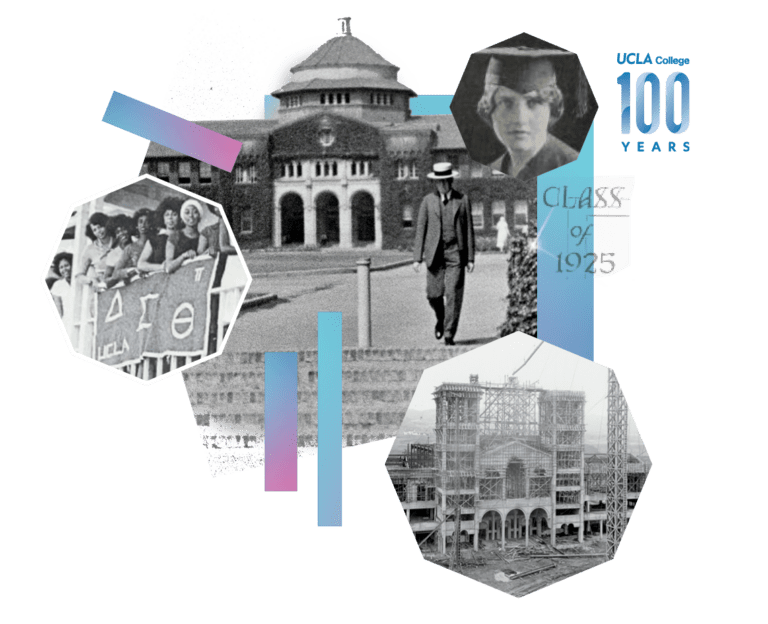
A collage celebrating 100 years of UCLA College featuring old campus buildings, students in sorority shirts, a person in 1920s attire, a woman in graduation cap, and the text “Class of 1925” and “UCLA College 100 Years.”.
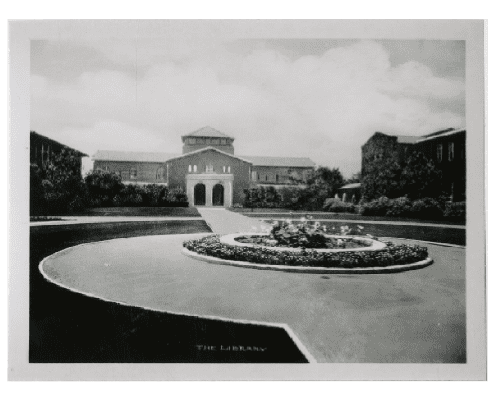
Black-and-white photo of a large brick library building with an arched entry, surrounded by gardens. A circular fountain or flower bed is in the foreground, with a pathway leading to the entrance.
#1
Our Story Begins

(1923) While UCLA is only four years old and still located on Vermont Ave., the UCLA College is established with 13 majors: chemistry, economics, English, French, history, Latin, mathematics, philosophy, physics, political science, psychology, Spanish and zoology.
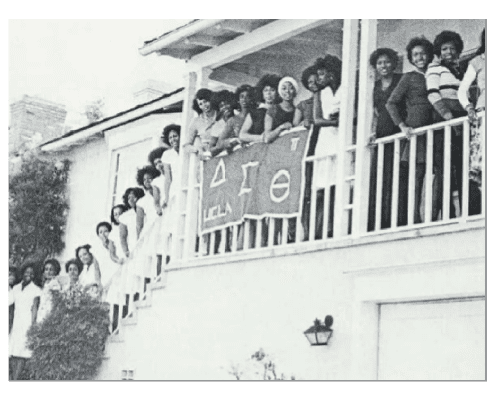
A group of women pose on a staircase and balcony outside a house, smiling at the camera. They hold a banner displaying Greek letters ΔΣΘ (Delta Sigma Theta). The image is in black and white.
#2

(1923) Black Greek life on campus is in full swing. In January, Black women form UCLA’s first-ever Greek-lettered organization, the Pi chapter of the Delta Sigma Theta sorority. In April, a Black fraternity, the Upsilon chapter of Kappa Alpha Psi, is launched. These become valuable sources of support for countless students.
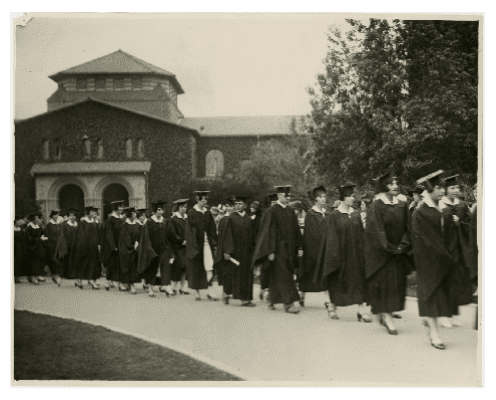
A group of graduates in caps and gowns walk in a procession outside a large brick building, surrounded by trees, on a cloudy day.
#3

(1925) UCLA’s first bachelor of arts degrees are awarded to 100 women and 24 men.
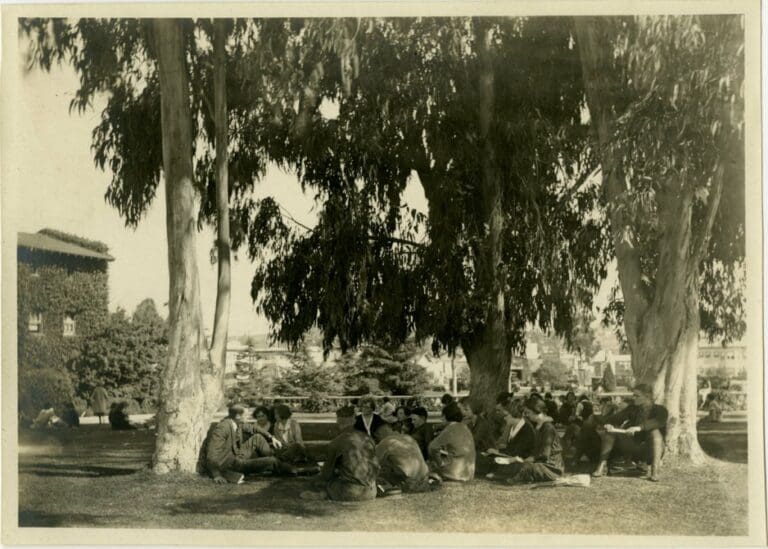
A group of people sit in a circle on the grass beneath large trees, possibly in a park or campus setting, engaged in conversation on a sunny day. Buildings and foliage are visible in the background.
#4
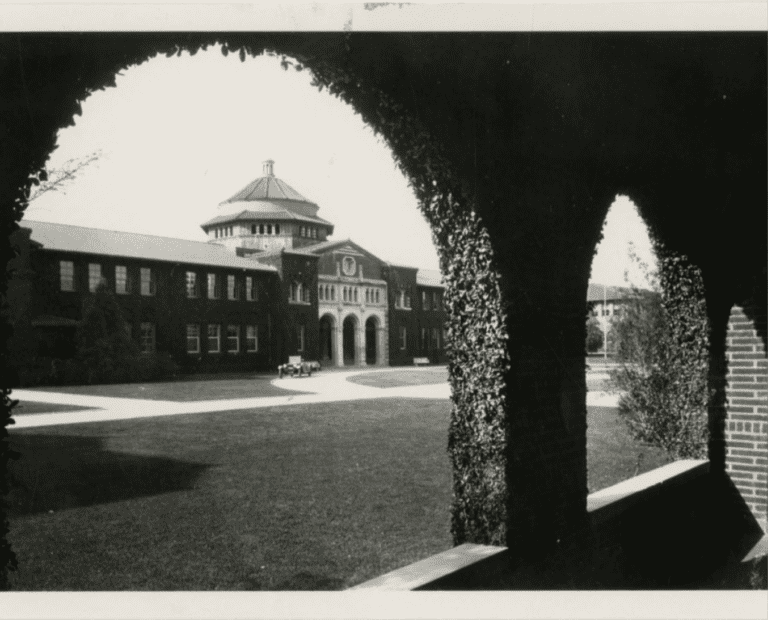
Black and white photo of a large brick building with an arched entrance and a central tower, viewed through a foreground archway. A vintage car is parked in front, and open lawns surround the building.
#5

(1928) The first endowed professorship (in philosophy) is established by Mr. and Mrs. C. N. Flint.
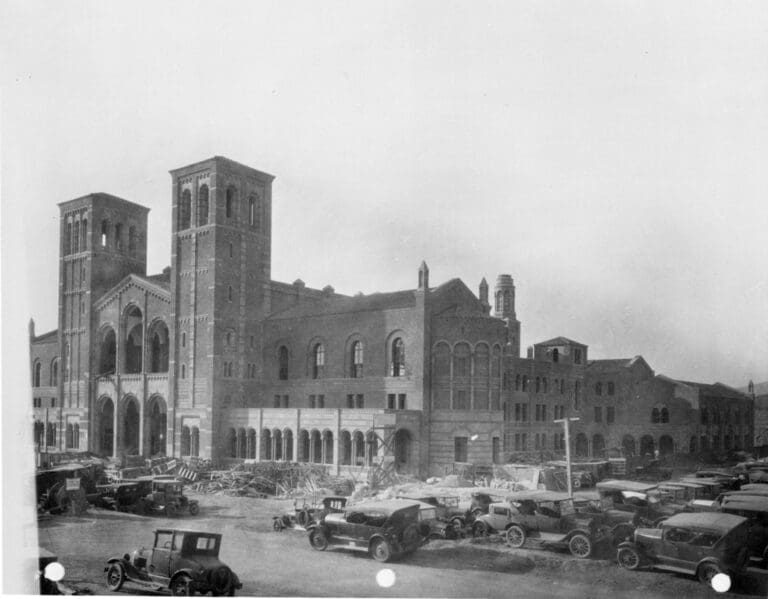
Historic black-and-white photo of a large Romanesque-style building under construction, with scaffolding and vintage cars parked in the foreground.
#6

(1929) The Westwood campus opens with 5,500 students enrolled.

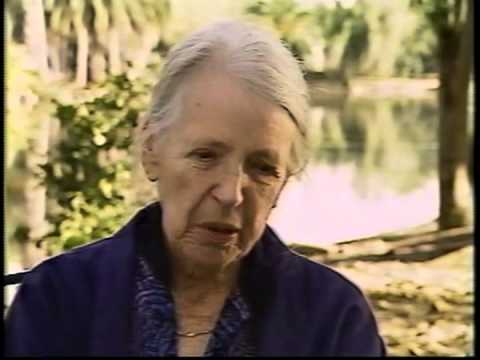
An elderly woman with gray hair pulled back, wearing a dark blue jacket, sits outdoors near a pond with trees and greenery in the background. She has a calm, thoughtful expression.
#7

(1929) Shortly after UCLA begins classes in Westwood, the botanical garden is established along an arroyo on the east side of the campus. Fifty years later, in 1979, the garden is named after Mildred E. Mathias, director from 1956 to 1974 and a UCLA professor.
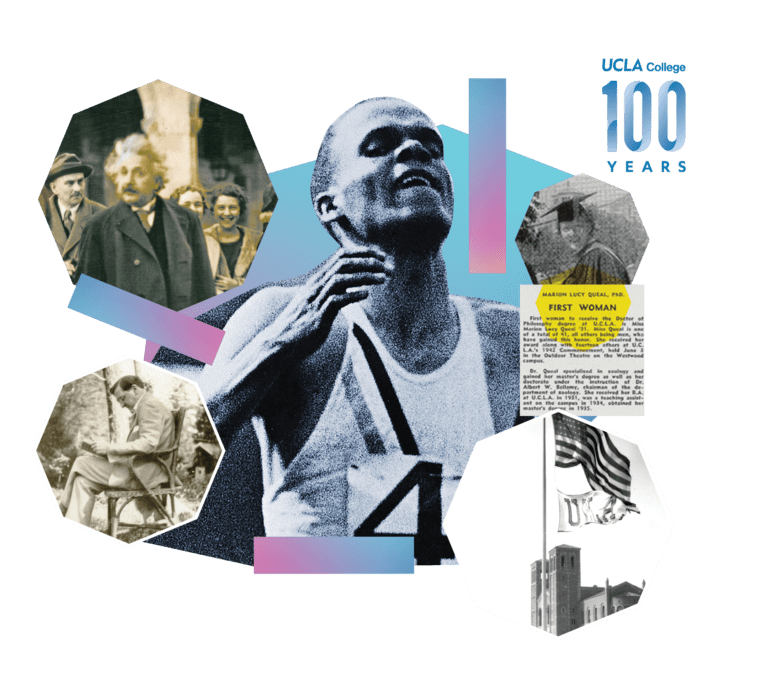
Collage celebrating 100 years of UCLA College, featuring historic black-and-white photos: a runner finishing a race, Albert Einstein, a seated man, newspaper clippings, an American flag, and a campus building.
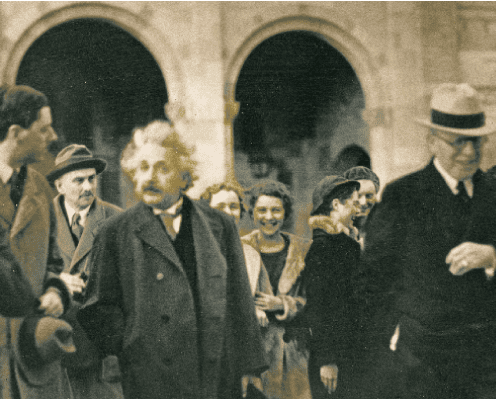
A group of people, including a man with distinctive white hair and a mustache resembling Albert Einstein, walks together outside a large stone building with arched doorways. The mood appears cheerful and informal.
#8

(1932) Albert Einstein speaks at Royce Hall, one of the earliest globally renowned guest lecturers on UCLA’s campus — but by no means the last.
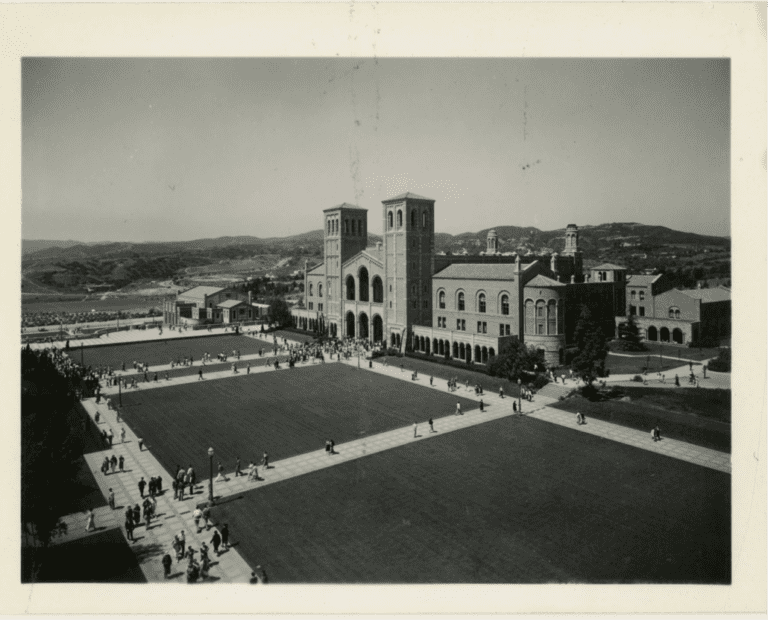
Black and white photo of a large campus quad with people walking on paths, featuring a prominent brick building with two tall towers and mountains visible in the background.
#9

(1933) The first UCLA master’s programs are approved in 16 fields.
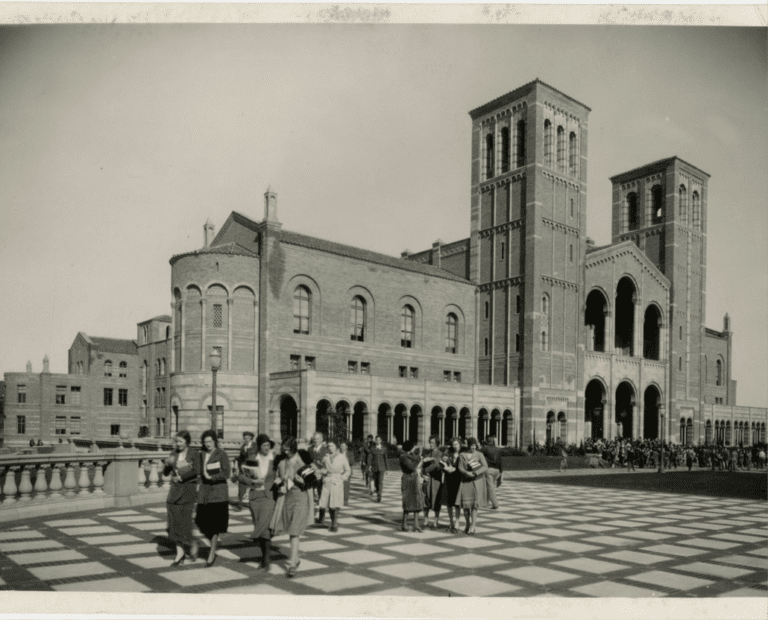
A black-and-white photo of a large brick building with arches and towers, resembling a university hall, with groups of people walking and gathering on a checkered plaza in front.
#10

(1934) Helen Cecilia Bender earns the first master’s degree awarded by UCLA.
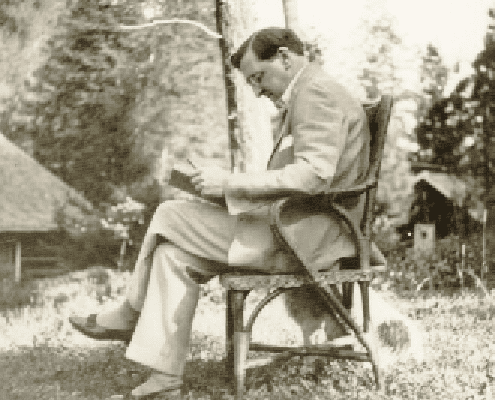
A man in a light-colored suit sits on a wooden chair outdoors, reading a book. Trees and a building are visible in the blurred background, suggesting a peaceful, natural setting.
#11

(1934) William Andrews Clark Jr. bequeaths a 13,000-volume book collection and library to UCLA, creating the Clark library.
A large, dark, pitted meteorite is displayed on a stand in a museum exhibit, with informational displays and rock samples visible in the background.
#12
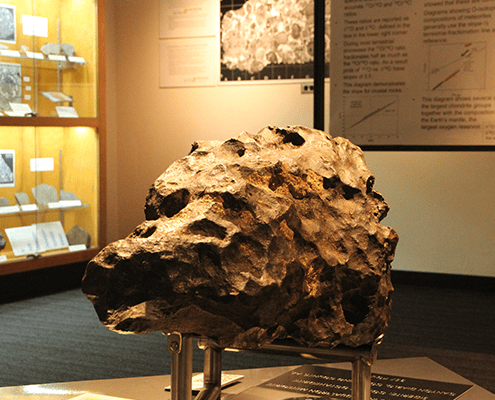
(1934) The UCLA Meteorite Collection is created when William Andrews Clark, Jr. donates a 357-lb fragment of the Canyon Diablo meteorite, now known as the Clark Iron. Today, the collection is one of the largest in the U.S., and the UCLA Meteorite Gallery even holds an annual poetry contest.
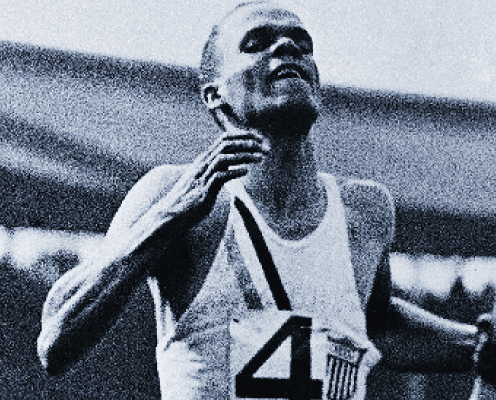
A male athlete wearing a tank top with the number 4 and a USA emblem crosses the finish line, arms raised and expression triumphant, during a race. The image is in black and white.
#13

(1936) James “Jimmy” LuValle wins a bronze Olympic medal alongside teammate Jesse Owens, who is also Black, at the games in Berlin, presided over by Adolf Hitler. LuValle goes on to become a world-renowned chemist.
A man in graduation attire reads a book, while a faded background shows a vintage newspaper headline about UCLA granting its first Ph.D. and a photo of two men shaking hands.
#14

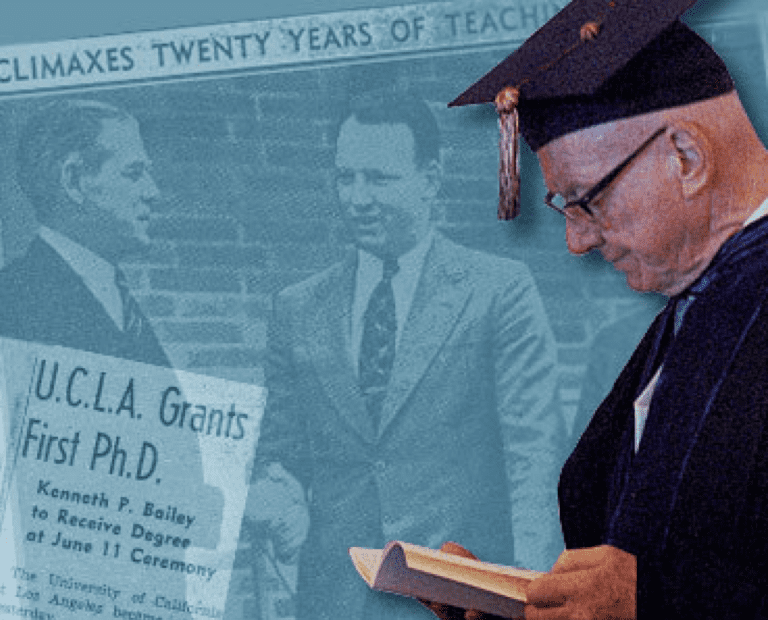
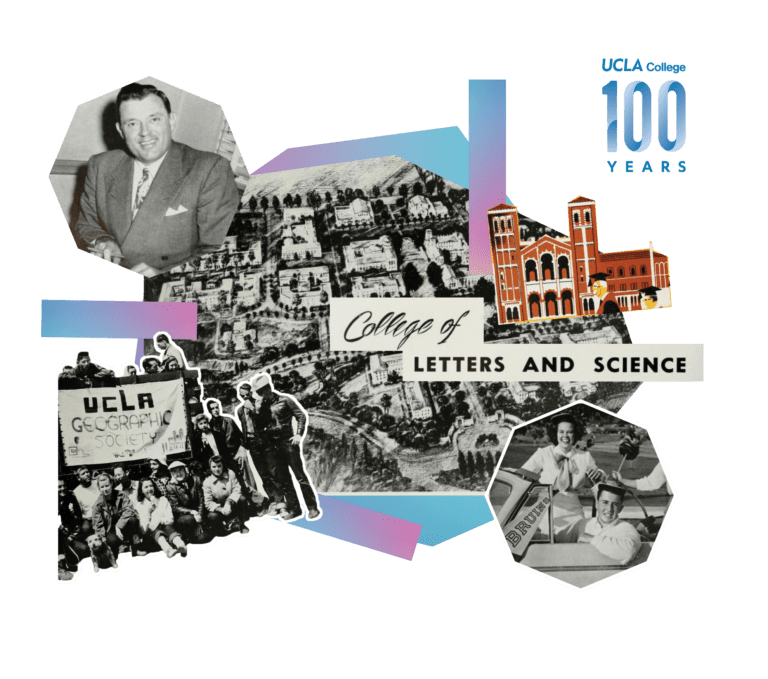
(1938) Kenneth P. Bailey earns the first doctoral degree awarded by UCLA: a Ph.D. in history.

A collage featuring UCLA College of Letters and Science’s 100th anniversary logo, historic photos of people, Royce Hall, and a UCLA Geographic Society group holding a banner. Text reads “College of Letters and Science.”.
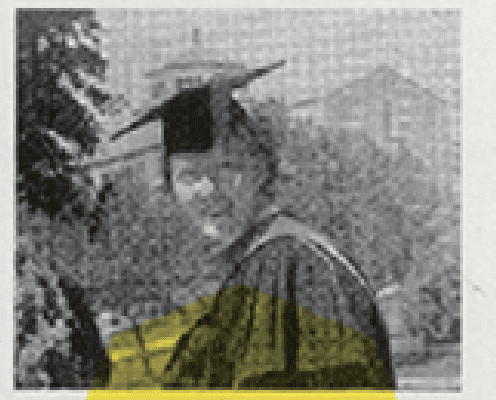
A person wearing a graduation cap and gown stands outdoors, with trees and a building in the background. The image is black and white and slightly pixelated.
#15

(1942) Marion Lucy Queal becomes the first woman to earn a doctoral degree from UCLA: a Ph.D. in zoology.
Two photos—one of a group performing on stage under a “Spring Sing” sign, and one of a woman singing—are arranged around Scrabble tiles spelling “Spring Sing A History” on a wooden surface.
#16

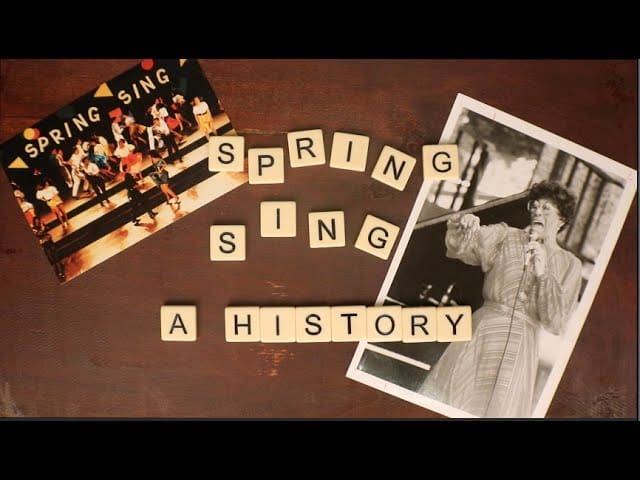
(1945) Launching as a “friendly competition in Royce Hall for the title of ‘Champion Serenader of Sorority Row,’” the competition now known as Spring Sing quickly grows into a phenomenon that continues to this day. One of its most famous present-day champions is Tony- and Grammy-winning singer and UCLA College alumna Sara Bareilles.
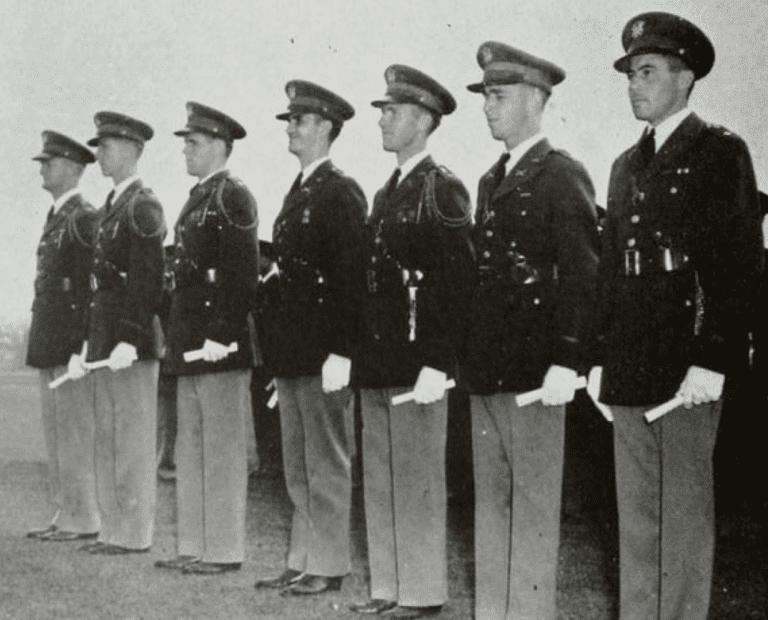
Seven men in military uniforms stand in a line outdoors, each holding a rolled document in their right hand. They appear to be part of a formal ceremony or graduation event.
#17

(1946) With enrollment rising sharply after WWII, the UCLA College is reorganized into four divisions, each headed by a dean: humanities, life sciences, physical sciences and social sciences.
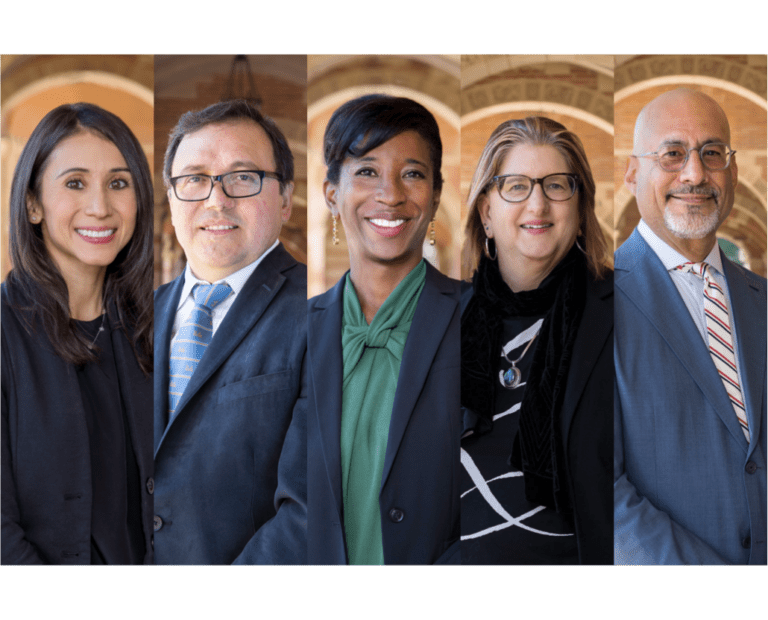
Five professionally dressed adults stand side by side, smiling at the camera, with an arched hallway in the background.
#18

(1946) The first deans of the UCLA College are Paul A. Dodd, professor of economics (overall dean), Albert W. Bellamy (life sciences), Dean E. McHenry (social sciences), Franklin P. Rolfe (humanities) and William Young (physical sciences).


Today’s UCLA College deans are Miguel García-Garibay (senior dean and dean of physical sciences), Adriana Galván (undergraduate education), Tracy Johnson (life sciences), Alexandra Minna Stern (humanities) and Abel Valenzuela (social sciences, interim).
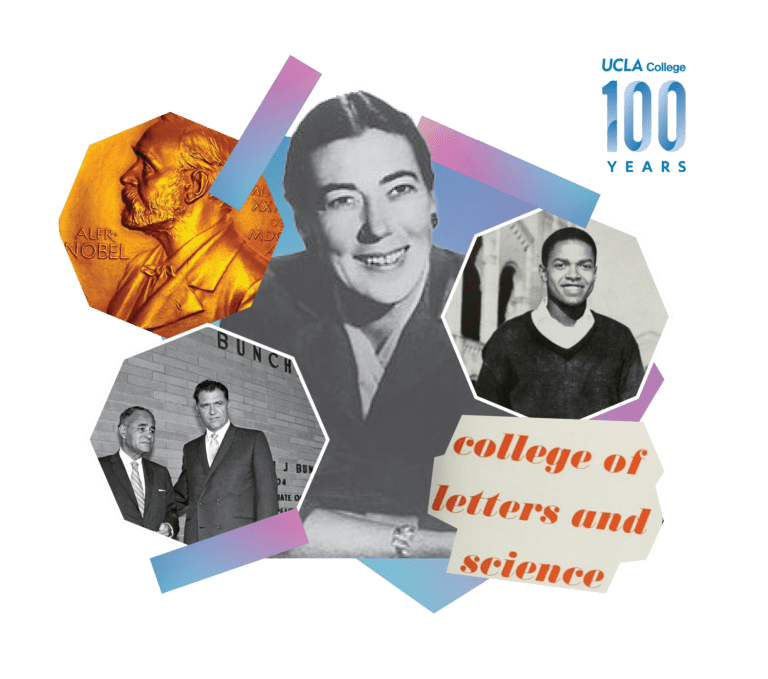
A collage celebrating 100 years of UCLA College, featuring historic photos, a Nobel Prize medal, diverse individuals, and the text college of letters and science in orange on a geometric pastel background.
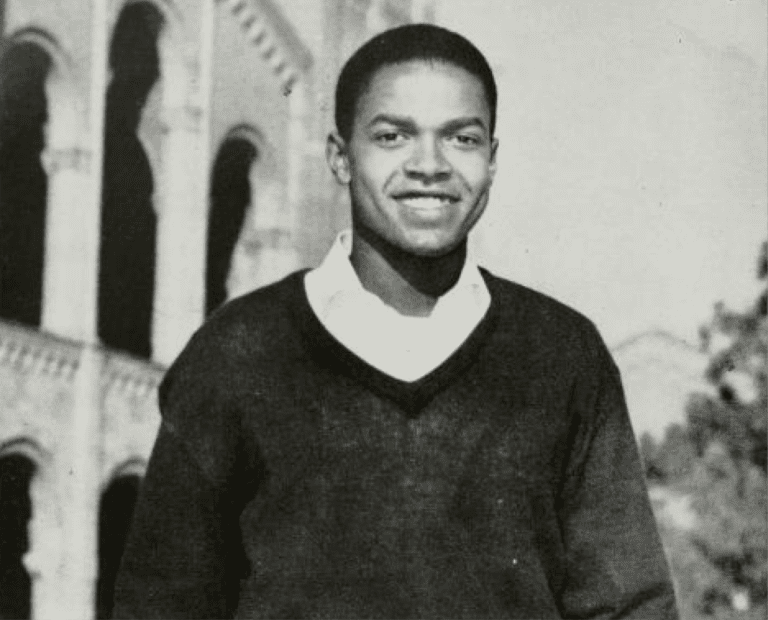
A young man wearing a dark sweater and white collared shirt smiles outdoors in front of a large, arched building. The photo is in black and white.
#19

(1950) Sherrill Luke, the first Black student body president at UCLA and the second in the U.S., graduates. His Bruin connections remain strong: he stays involved at UCLA as a member of the Foundation Board of Directors, president of the Alumni Association and as a UC Regent.
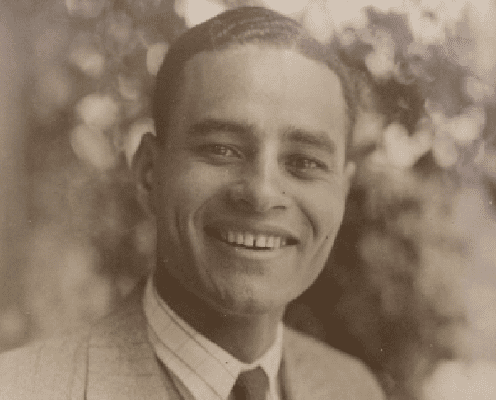
A young man in a suit and tie smiles warmly at the camera, with blurred foliage in the background. The image is sepia-toned, giving it a vintage feel.
#20

(1950) Alumnus Ralph Bunche becomes the first Black winner of a Nobel Prize, earning the Nobel Peace Prize.

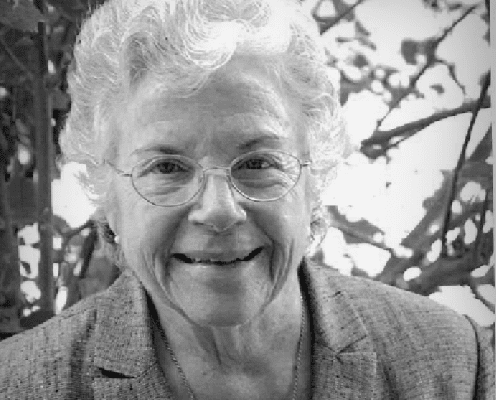
An older woman with curly white hair, glasses, and a warm smile is wearing a blazer and sitting outdoors in front of leafy branches. The image is in black and white.
#21

(1954) Diane Donoghue graduates, so changed by her college experience traveling to India as part of a UCLA program that she chooses to become a nun. Her work leads to the creation of 11 housing developments in South Central Los Angeles.
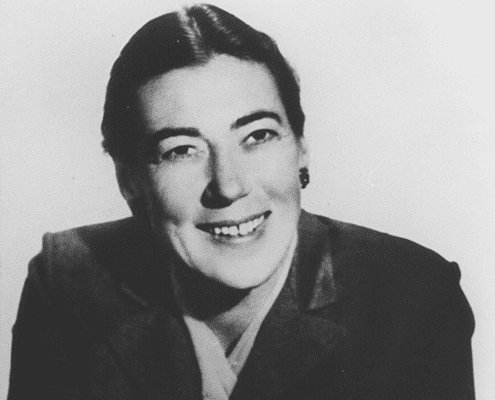
Black and white portrait of a woman with dark hair pulled back, wearing a suit jacket, smiling and looking slightly to the side.
#22

(1954) UCLA psychologist Evelyn Hooker begins publicly presenting her research showing that there is no detectable difference in the psychological health of homosexual and heterosexual men. Hooker’s research is considered to be the foundation for the decision to remove homosexuality from the Diagnostic and Statistical Manual of Mental Disorders.
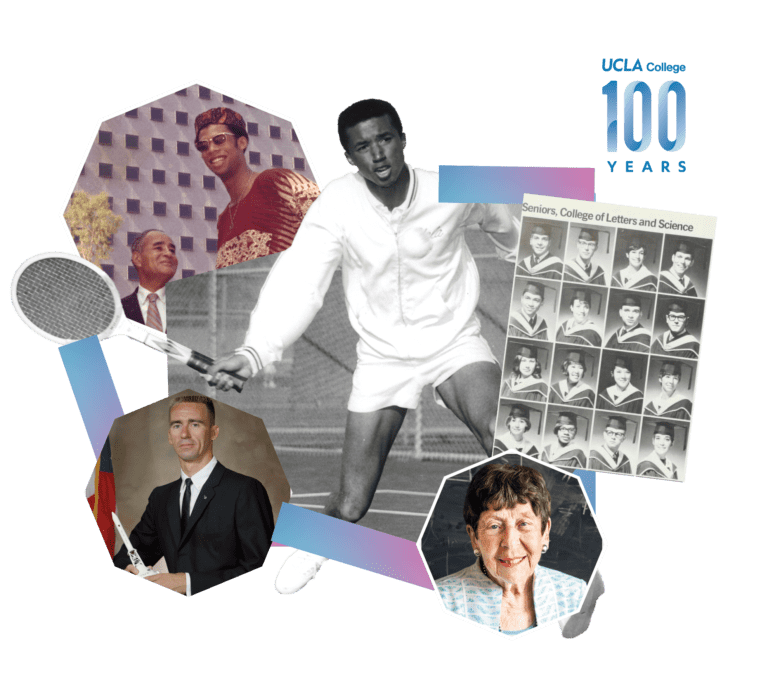
Collage featuring a tennis player, a man in a cap and gown, a group graduation photo, an older woman smiling, a man in a suit, and the UCLA College 100 Years logo on a light background.
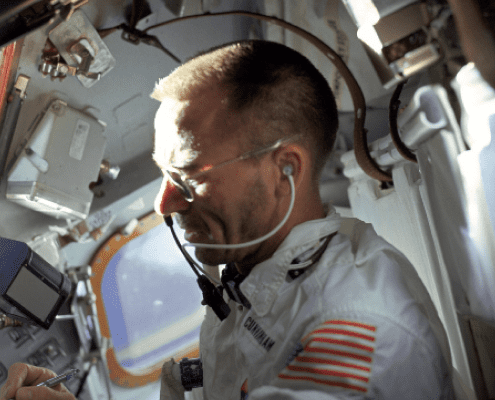
An astronaut in a white suit with an American flag patch, wearing a headset, works inside a spacecraft filled with equipment and controls, with sunlight illuminating his face.
#23

(1960) Walt Cunningham earns his undergraduate degree in physics from UCLA, going on to get his master’s one year later. Chosen to train as an astronaut by NASA in 1963, he became the first Bruin in space in 1968.

Many other UCLA alumni have followed in Walt Cunningham’s footsteps, including Megan McArthur, a 1993 engineering alumna. UCLA College Bruins who have gone to space include:
– Taylor Wang

– Anna Lee Fisher

– John Phillips

– Jessica Watkins

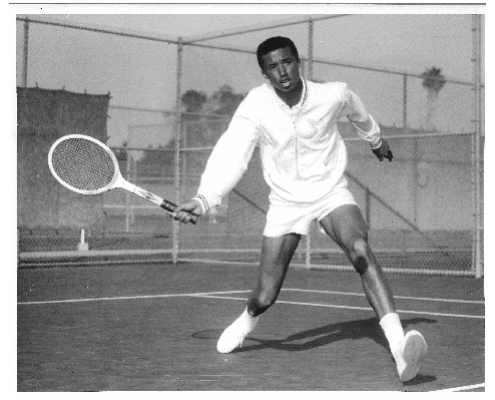
A Black male tennis player in a white outfit lunges forward to hit a tennis ball with his racket on an outdoor court, with a fence and trees visible in the background.
#24

(1966) Arthur Ashe graduates from UCLA with a degree in business administration and goes on to become a global athletics icon, activist and humanitarian. In 2017, the Arthur Ashe Legacy at UCLA is established, which will include the UCLA Arthur Ashe Jr. Scholarship.

Recipients of this scholarship are:

– Maripau Paz

– Vahagn Aldzhyan

– Solia Valentine

– Senay Zedingel

– Sydney Do

An older woman with short brown hair, pearl earrings, and a light-colored patterned jacket smiles in front of a chalkboard with writing and diagrams.
#25

(1967) Margaret Kivelson joins the UCLA faculty as an assistant research geophysicist. She goes on to become a giant in her field.
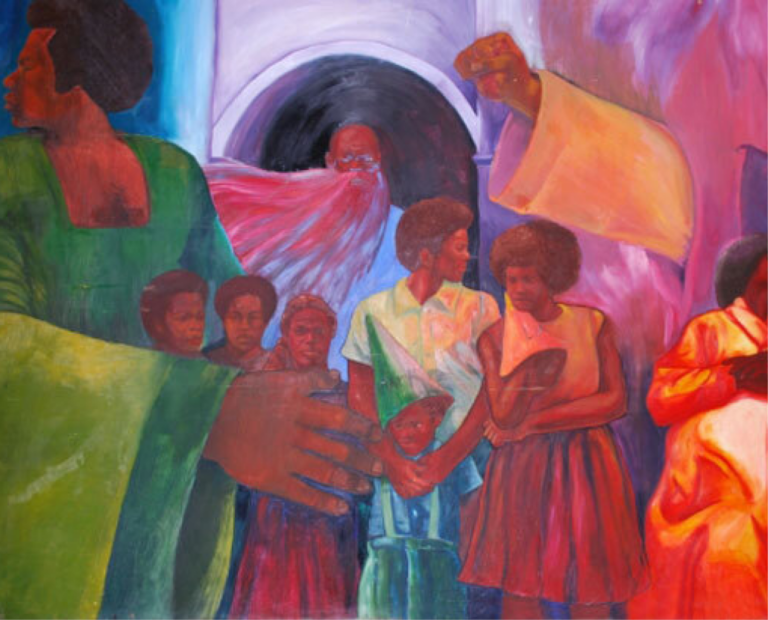
A colorful painting depicts several Black figures, including women and children, standing together with somber expressions. Large overlapping hands reach across the foreground, and a ghostly face appears in the background archway.
#26

(1969) In one banner year, the Center for African American Studies, the American Indian Studies Center, the Asian American Studies Center and the Chicano Studies Research Center all open. Today, the UCLA Institute of American Cultures serves as their central hub under David K. Yoo, vice provost of IAC and professor of Asian American studies and history.
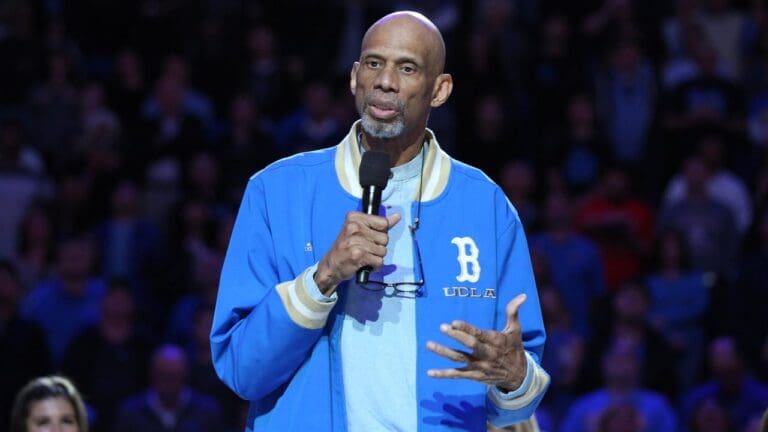
A tall man wearing a blue UCLA jacket holds a microphone and speaks to an audience. He stands in front of a blurred crowd, gesturing with his hand, with glasses hanging from his neck.
#27
(1969) Kareem Abdul-Jabbar graduates with a degree in history and goes on to become a basketball superstar, pillar of the UCLA community and influential historian, activist and cultural ambassador.
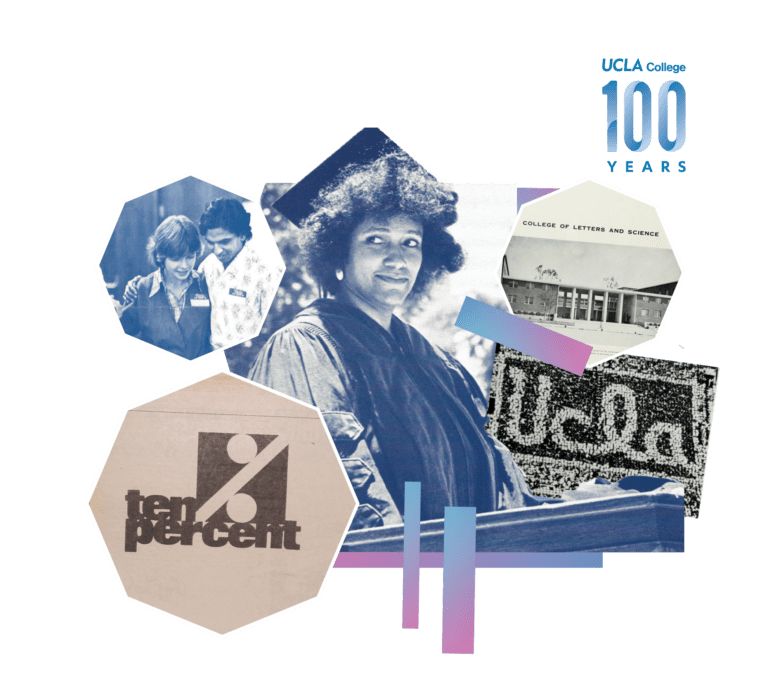
Collage with vintage photos of people, a UCLA college building, a “ten percent” logo, and a stylized “UCLA” graphic. Text reads “UCLA College 100 Years.” Blue and purple gradients accent the image.
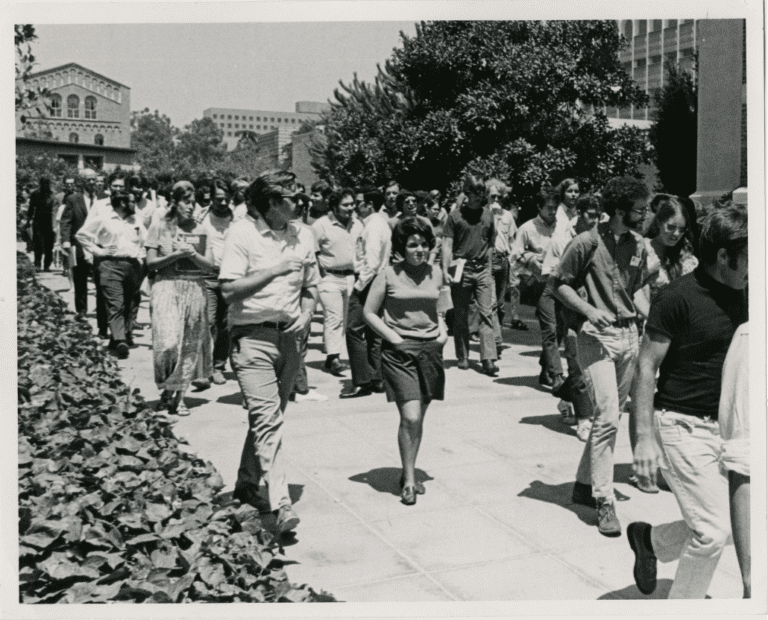
A large group of people, mostly young adults, walk together outdoors on a sunny day along a sidewalk lined with plants, with trees and campus buildings in the background.
#28

(1971) The Academic Advancement Program is created to enhance access and success for underrepresented students.

A group of people wearing hats and casual clothes stand around and work at an archaeological excavation site, digging and examining the ground under a sunny sky.
#29

(1973) The UCLA Cotsen Institute of Archaeology is created. Today, celebrating its fiftieth anniversary, the institute has grown into one of the world’s largest consortia of working archaeologists, including some 30 UCLA professors from 11 different disciplines who work alongside roughly 60 research associates affiliated with nearby colleges and universities.

Logo for The 1939 Society featuring a stylized human figure with outstretched arms forming a tree with blue leaves, and the text THE 19 39 SOCIETY in blue and brown letters.
#30

(1979) The first chair in Holocaust studies at an American public university is established in the College, thanks to the 1939 Society.
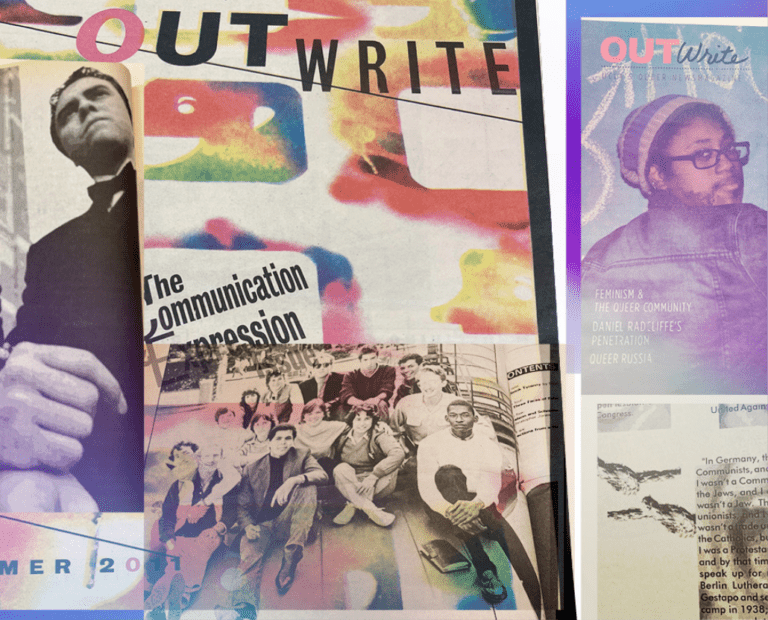
A collage of OUTWRITE magazine covers and pages, featuring colorful designs, black-and-white photos of people, and headlines about communication, feminism, the queer community, and creative expression.
#31

(1979) OutWrite, the oldest queer college publication in the United States, is founded at UCLA. Originally called TenPercent after the assertion in Alfred Kinsey’s “Sexual Behavior in the Human Male” that 10% of men identified as homosexual, the name was changed in 2005 to be more inclusive of all experiences.
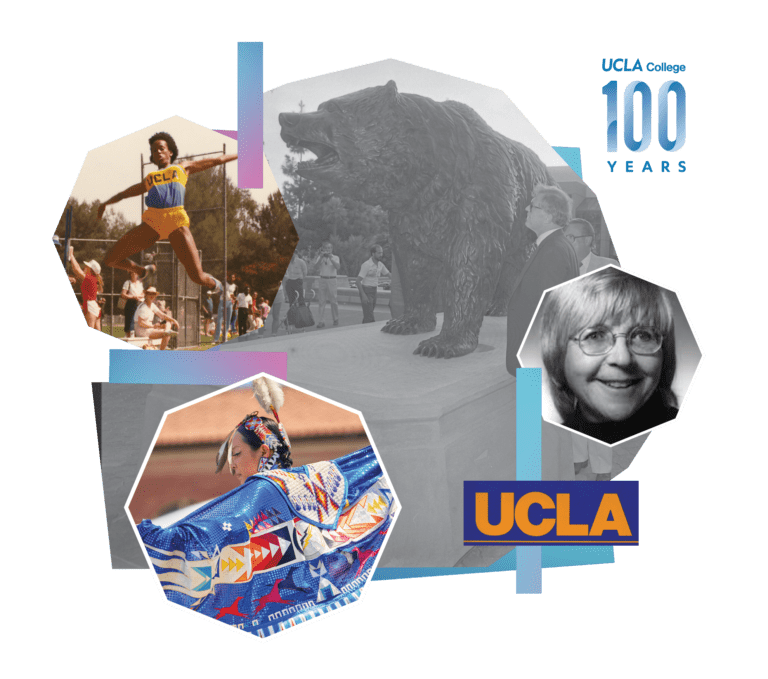
A collage celebrating UCLA’s 100 years, featuring a student athlete pole vaulting, a bear statue, a portrait of a woman in glasses, and a person in colorful traditional attire, with the UCLA logo and 100 Years text.
A person with short blonde hair, glasses, and a black top speaks enthusiastically at a podium with a microphone in front of a plain, grayish wall.
#32

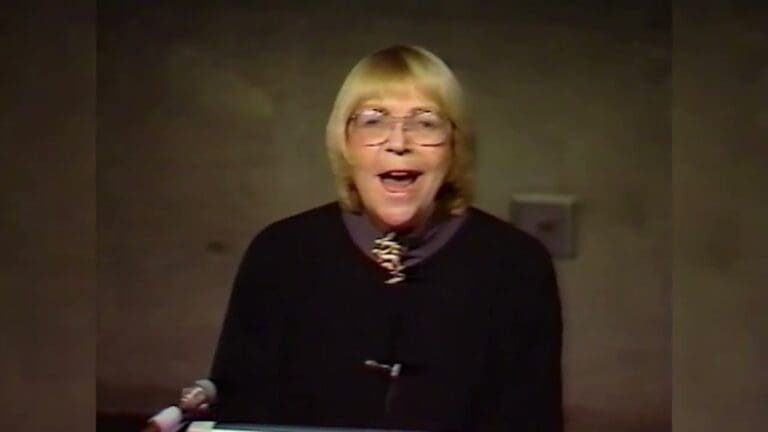
(1980)  A major figure in the history of the UCLA College and the department of linguistics, Professor Victoria Fromkin is appointed UCLA’s vice chancellor for graduate programs, the first woman to achieve the rank of vice chancellor in the UC system. Fromkin also broke barriers at the national level as the first woman to serve as president of the Association of Graduate Schools in the American Association of Universities. One of the department’s first Ph.D. recipients, she was a faculty member from 1965 until her death in 2000, and department chair from 1973–77. She also created a language for the 1970s TV show “Land of the Lost.”
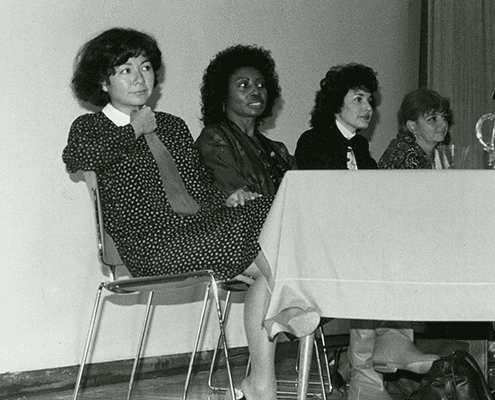
Four women sit at a table during what appears to be a panel discussion or meeting. Three look forward attentively, while one looks to the side. The setting is indoors and the image is in black and white.
#33

(1984) The UCLA Center for the Study of Women is founded, becoming the first organized research unit of its kind in the UC system.
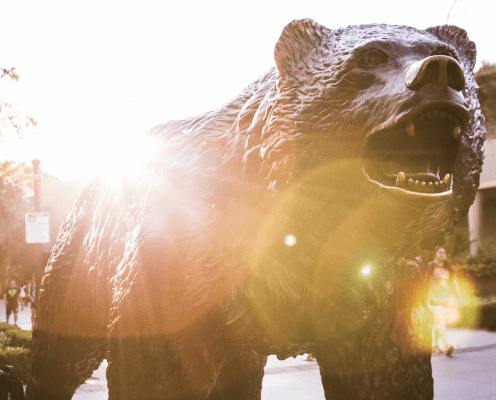
A bronze bear statue stands outdoors at sunrise or sunset, with sunlight shining brightly behind it and lens flares visible. The bear has an open mouth, showing its teeth.
#34

(1984) The Bruin, the iconic 10-foot long and 6-foot bronze statue, is installed.

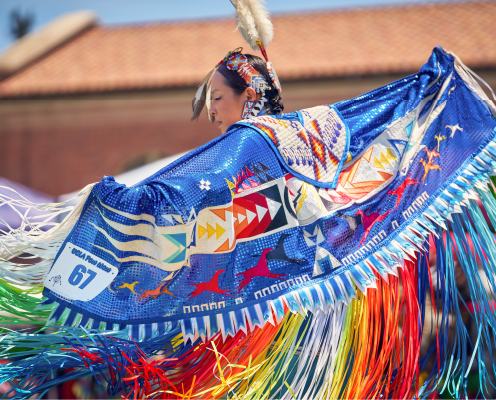
A dancer in vibrant traditional regalia with colorful fringe and patterns performs at a powwow. She wears a feathered headpiece and a blue shawl adorned with geometric and bird designs. A number “67” tag is visible on her outfit.
#35

(1985) UCLA students organize the first Pow Wow, which has become a much-loved annual tradition.
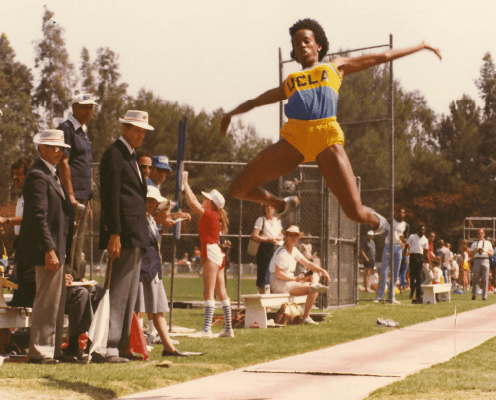
An athlete wearing a UCLA uniform is mid-air during a long jump at an outdoor track event, with spectators and officials watching nearby. Trees and sports equipment are visible in the background.
#36
(1986) Jackie Joyner-Kersee graduates, already a silver medalist in the Olympic Games in the heptathlon. Considered to be perhaps the greatest woman athlete of all time, she goes on to win three gold and two bronze medals, ultimately competing at four Olympic games.
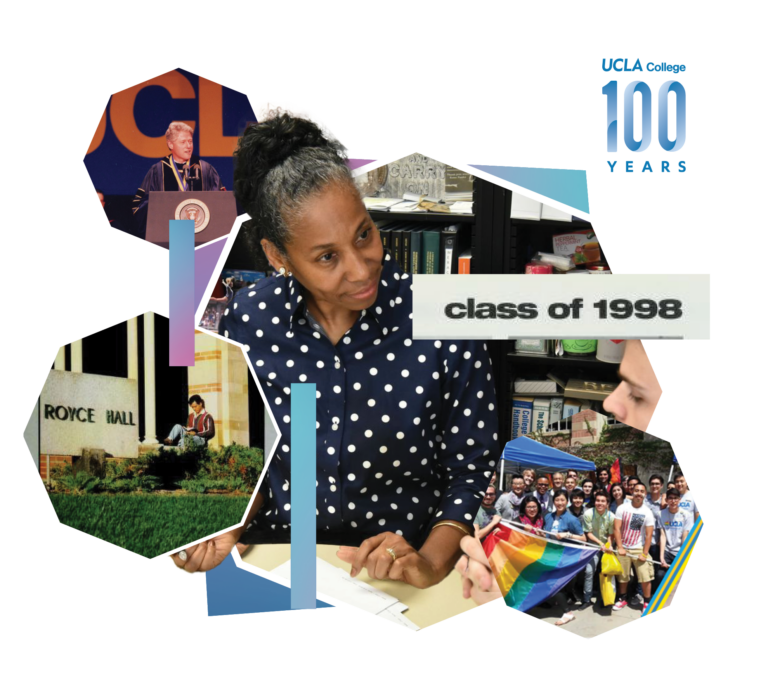
A collage celebrating UCLA College’s 100 years, featuring a woman in a polka dot shirt, a graduation speaker, Royce Hall, a class of 1998 sign, and a group of people holding a rainbow pride flag.
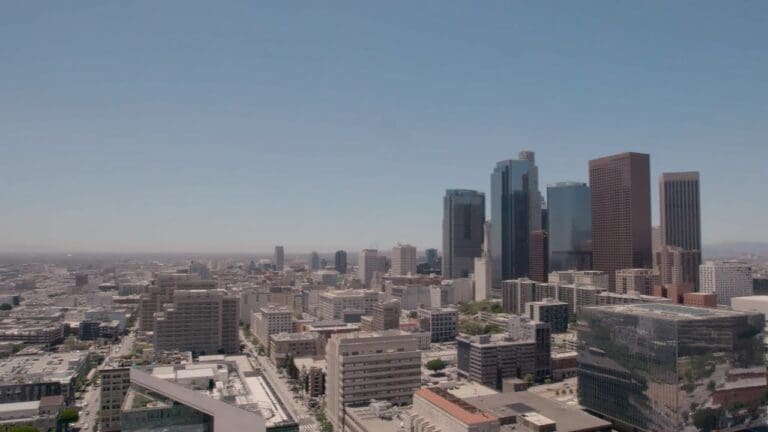
Aerial view of a city skyline with tall modern skyscrapers and various smaller buildings under a clear blue sky. The urban landscape stretches toward the horizon.
#37

(1994) The UCLA Center for Jewish Studies is established, now the UCLA Alan D. Leve Center for Jewish Studies.
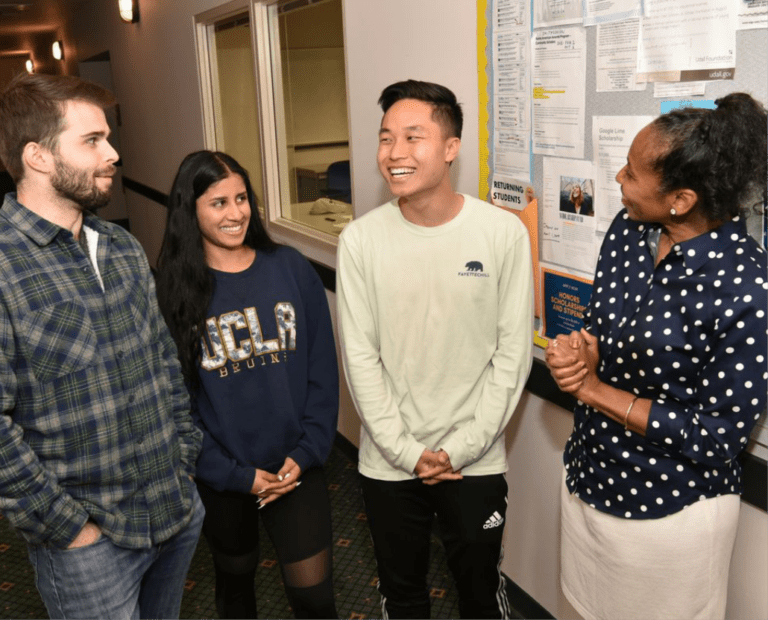
Four people stand together in a hallway, smiling and talking. Two are women, one wearing a UCLA sweater, and two are men. They are standing near a bulletin board with papers and notices pinned up.
#38

(1996) The Scholarship Resource Center, now the Center for Scholarships & Scholar Enrichment, is founded. Today it is still led by its original director, Angela Deaver Campbell.
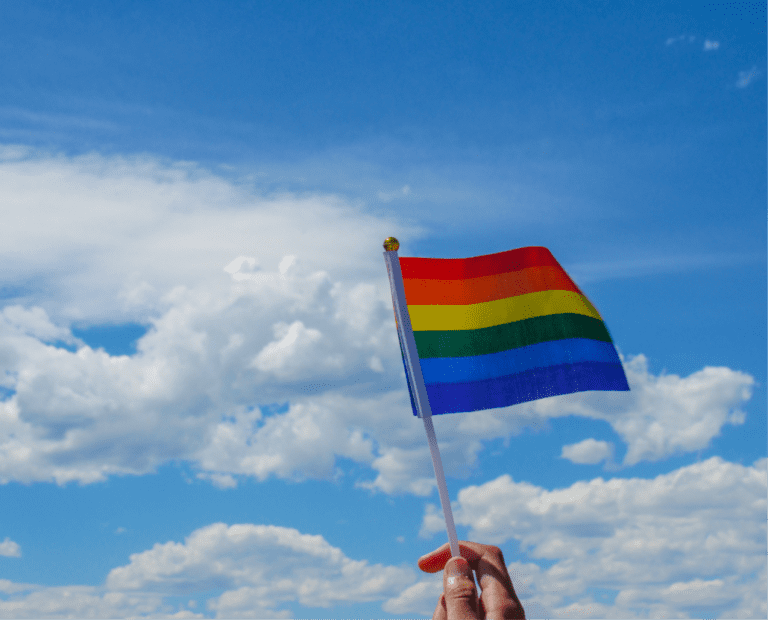
A hand holds up a small rainbow pride flag against a bright blue sky with scattered white clouds.
#39

(1997) Although the interdisciplinary LGBTQ studies program within the humanities division at the UCLA College was founded in 1997, UCLA has sponsored research in LGBTQ studies for more than 50 years, longer than almost any other university in the U.S.

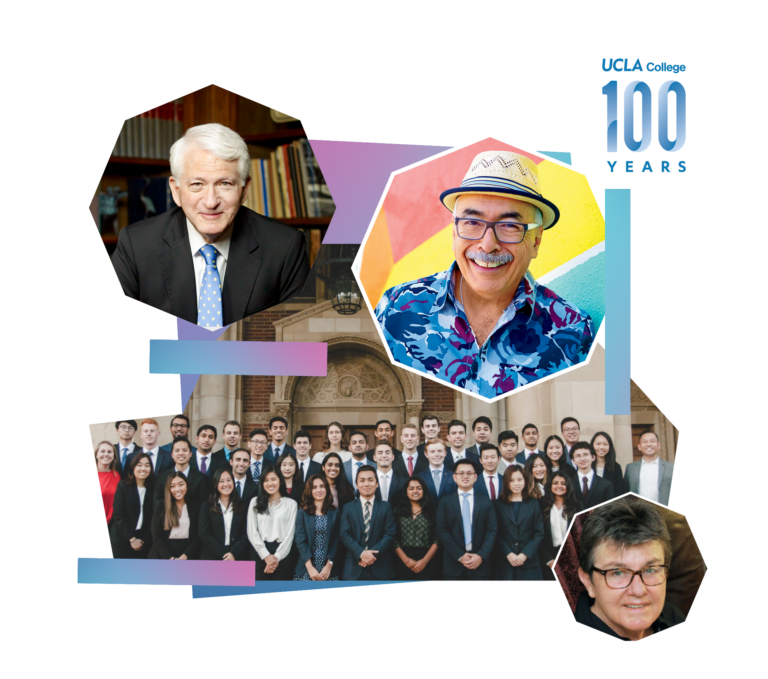
A collage featuring the UCLA College 100 Years logo, three individual portraits (two men, one woman), and a large group photo of smiling people in formal attire posed in front of a building.
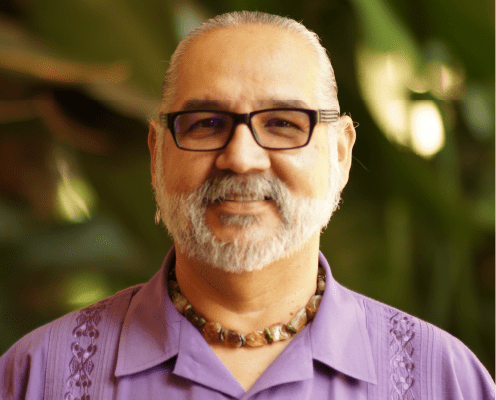
A smiling man with gray hair tied back, a gray beard, and glasses wears a purple shirt and a beaded necklace. Lush green foliage is blurred in the background.
#41

(2001) The Center for Community College Partnerships is founded, thanks to the vision of its founder and director, Alfred Herrera.
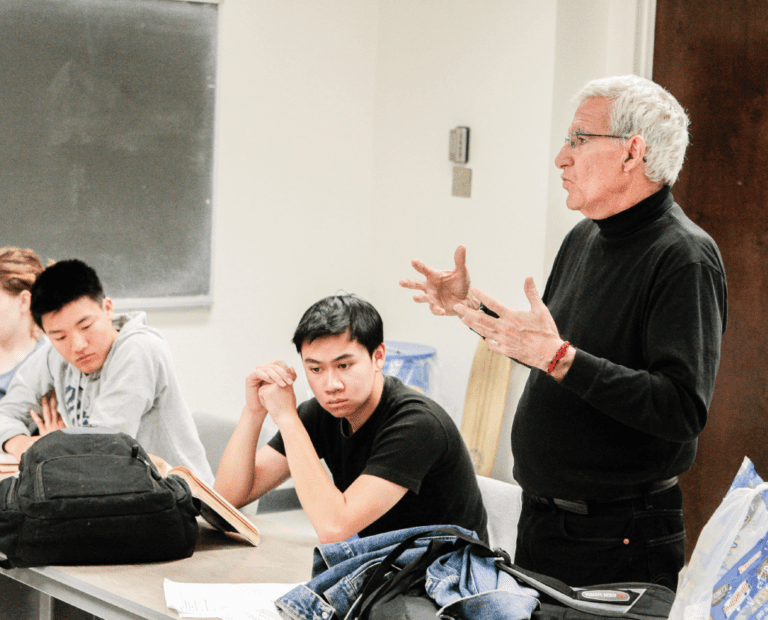
A man with gray hair and glasses speaks to a group of students seated at desks in a classroom. Two students listen attentively, while one looks down. A chalkboard is visible in the background.
#42

(2002) After their founding in 2001, the first Fiat Lux seminars — small classes to empower students (especially first-years) and faculty to engage in meaningful discussions on a range of impactful topics while building community and curiosity — are offered.
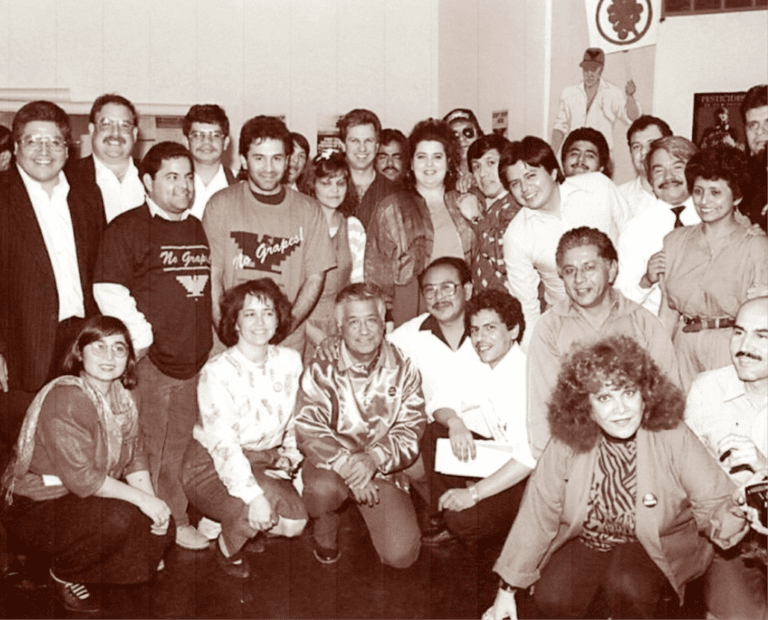
A large group of people, men and women, pose closely together indoors, smiling for the camera. The photo is in sepia tones and appears to be from the late 1980s or early 1990s.
#43

(2005) The UCLA César E. Chávez Department of Chicana/o Studies is created. In 2020, the name is expanded to the UCLA César E. Chávez Department of Chicana/o and Central American Studies.
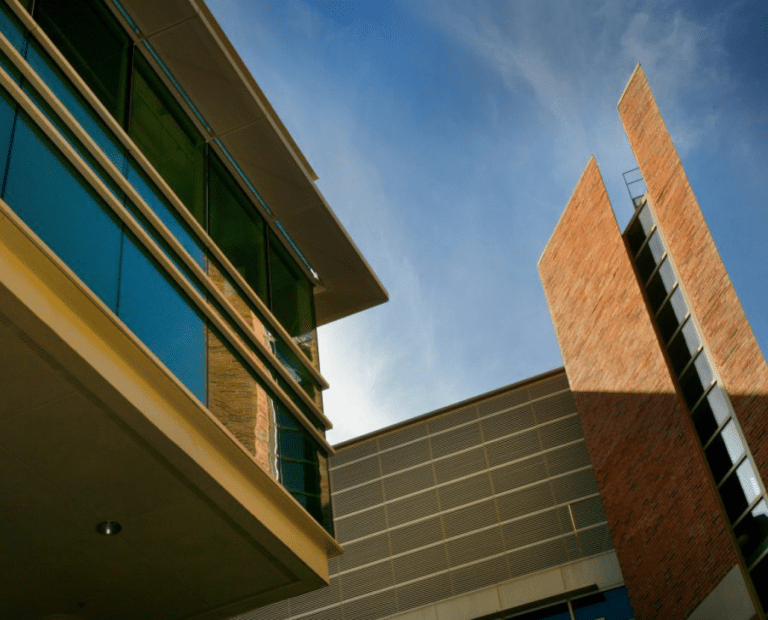
Modern buildings with glass, metal, and brick facades are shown against a clear blue sky. The perspective looks upward, highlighting sharp angles and architectural details.
#44

(2006) La Kretz Hall, home of IoES, becomes UCLA’s first LEED-certified building.

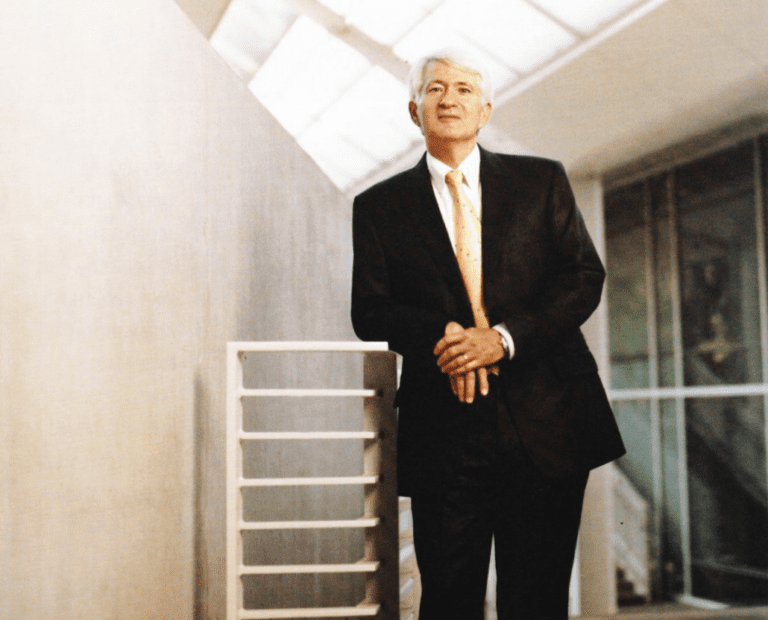
An older man in a dark suit and yellow tie stands indoors by a modern railing, with light streaming in from a skylight above and architectural lines in the background.
#45
(2007) Gene Block, a biologist serving as vice president and provost of the University of Virginia, becomes the sixth chancellor of UCLA. He will conclude his tenure at the end of the 2023-24 school year and focus on teaching and research at UCLA.
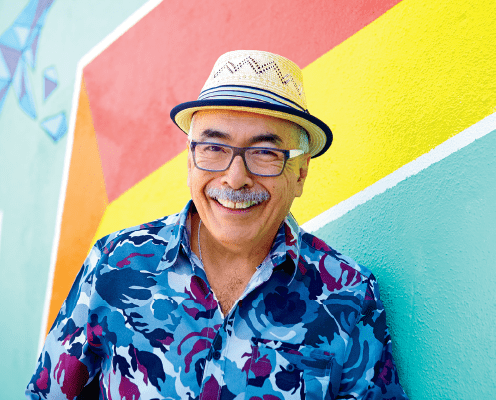
An older man with glasses and a patterned shirt smiles while standing in front of a colorful wall with diagonal stripes of red, yellow, and green. He is wearing a straw hat.
#46

(2008) Pulitzer Prize-winning alumna Kay Ryan is appointed the U.S. Poet Laureate. Her work uses irony and humor to unravel idiosyncrasies of the human experience. In 2015, Juan Felipe Herrera (pictured to the right) becomes the first Latino U.S. poet laureate. He received the UCLA Medal in 2017 for his achievements as an artist and activist.

A person wearing a gray sweater writes with a pen on paper at a wooden table. Nearby are a white mug, a closed notebook, and a smartphone.
#47

(2008) UCLA mathematicians discover the world’s largest known prime number to date, which is also the first prime with over 10 million digits. Over the last 50 years, members of UCLA’s mathematics department have discovered eight of the 51 currently known Mersenne Primes, defined as a prime that is one less than a power of two.
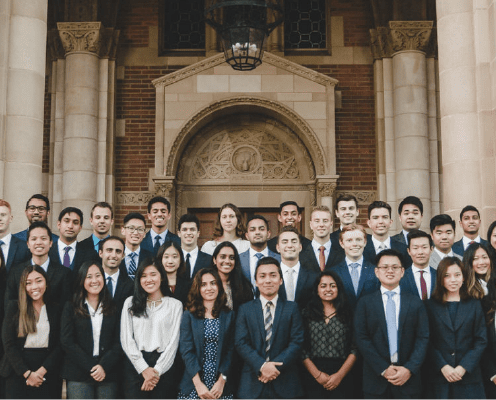
A large group of professionally dressed people, mostly young adults, stand smiling in rows outside a building with ornate stone columns and an arched doorway.
#48

(2008) The UCLA Department of Economics’ William Sharpe Fellows Program is founded through the generous support of alumnus Kevin Albert and the UCLA Economics Board of Visitors. The program is named in honor of Nobel Prize-winning economist and alumnus William F. Sharpe.
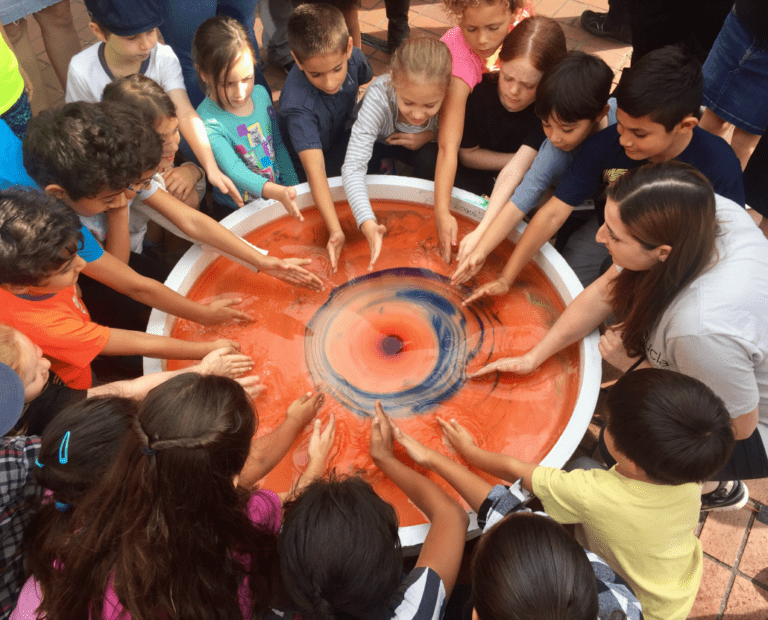
A group of children and an adult stand around a circular table with swirling red and blue liquid, each reaching in to touch it, creating a mesmerizing vortex pattern.
#49

(2009) Founded by astronomy graduate students, the annual all-ages science festival Exploring Your Universe launches. It is the largest science outreach event on campus and the largest science fair of any kind in L.A. County.
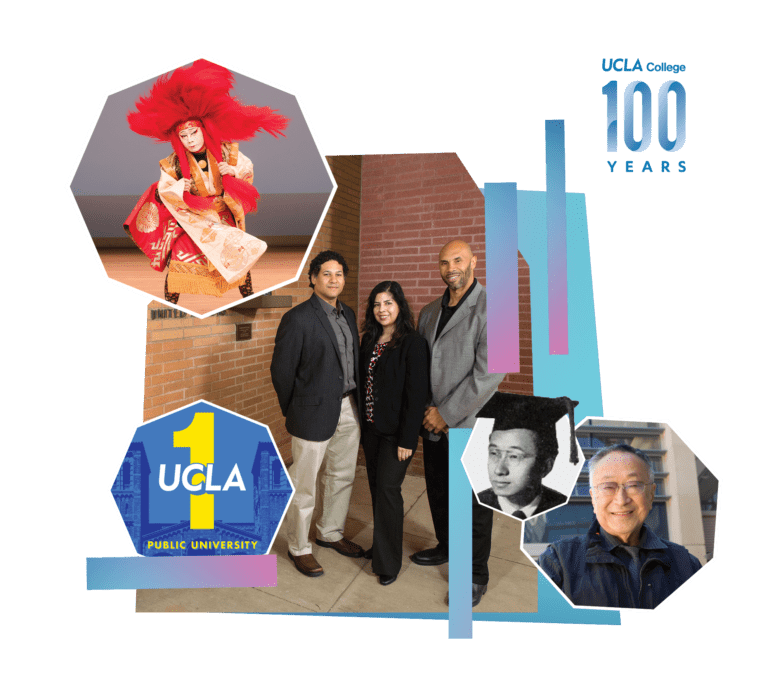
A collage featuring a Japanese performer, three people in business attire, a UCLA #1 ranking badge, a portrait of a young man in graduation cap, and an older person smiling. Text: UCLA College 100 Years.
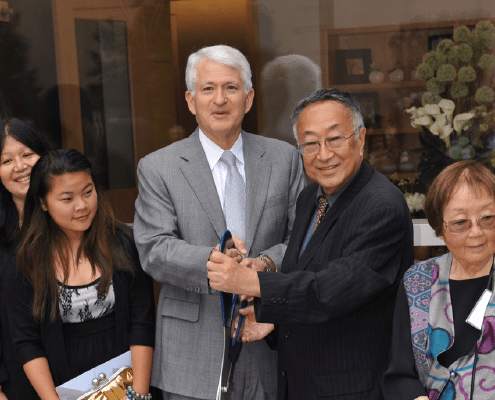
A group of people, including two men in suits holding large scissors, gather for a ribbon-cutting ceremony. Others stand nearby smiling, and potted plants are visible in the background.
#50

(2010) Faculty member and alumnus Paul Terasaki donates $50 million to the UCLA Division of Life Sciences, the largest gift in the history of the College. The new Terasaki Life Sciences Building is named in his honor. When he died in 2016, tributes from around the world poured in.
A smiling older man in a suit and tie stands next to a smiling older woman in a cream-colored top, with greenery and pink flowers in the background. Text reads: Luskin Lecture for Thought Leadership.
#51

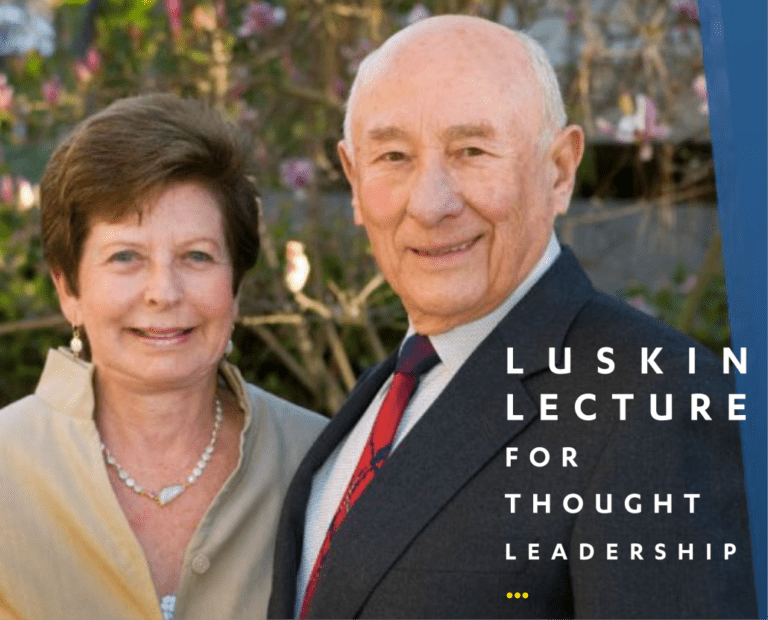
(2011) The Luskin Lecture for Thought Leadership is established as part of a transformative gift from Meyer and Renee Luskin with the goal of sharing knowledge and expanding the dialogue among scholars, leaders in government and business, and the greater Los Angeles community.


Distinguished speakers in the series have included Bob Woodward, France Cordóva, Hillary Rodham Clinton and Bill Clinton.
A large group of people poses for a photo outside a brick building, with trees on both sides. Some hold signs reading DataFest. The group is spread out across a stone-paved courtyard under a clear sky.
#52

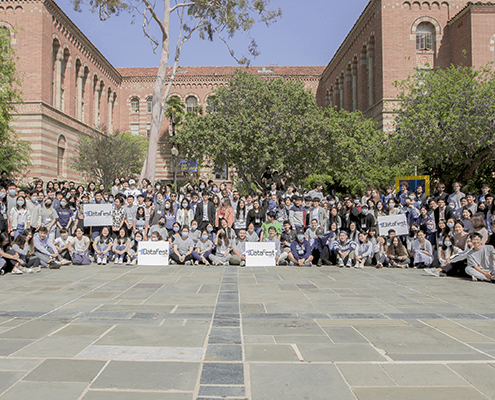
(2011) The American Statistical Association DataFest, a celebration of data in which teams of undergraduates work around the clock to find and share meaning in a large, rich and complex dataset, is founded at UCLA.
An elderly man with gray hair and glasses, wearing a blue lab coat, sits and smiles in a laboratory setting with scientific equipment visible on the counter beside him. The background is blue.
#53

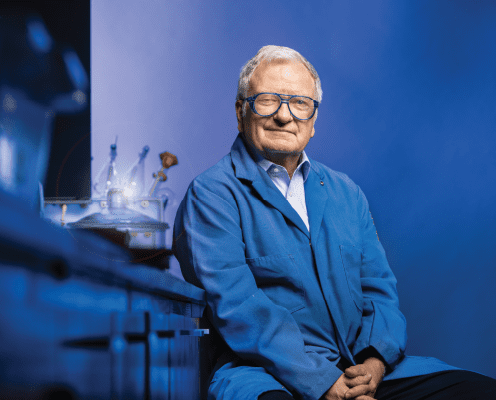
(2012) Breakthrough prostate cancer drug Xtandi, designed by a chemistry team led by UCLA faculty Michael Jung in collaboration with a team of biologists led by Dr. Charles Sawyers, is approved by the FDA. The royalty interest in Xtandi was sold for $1.14 billion in 2016, which has permitted scholarships, matching gift funds and support for research.
Aerial view of UCLA campus with overlay text: With a $20 million gift from the Anthony and Jeanne Pritzker Family Foundation, UCLA is making an impact. Blue tint and light flare effects are visible.
#54

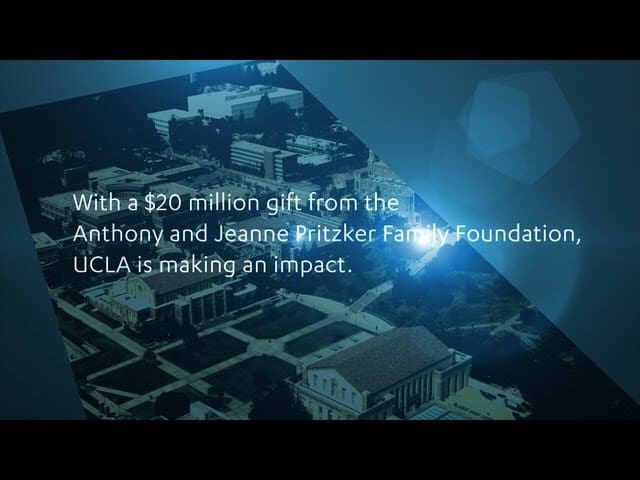
(2013) The IoES receives an impact gift of $15 million from the Anthony and Jeanne Pritzker Family Foundation.
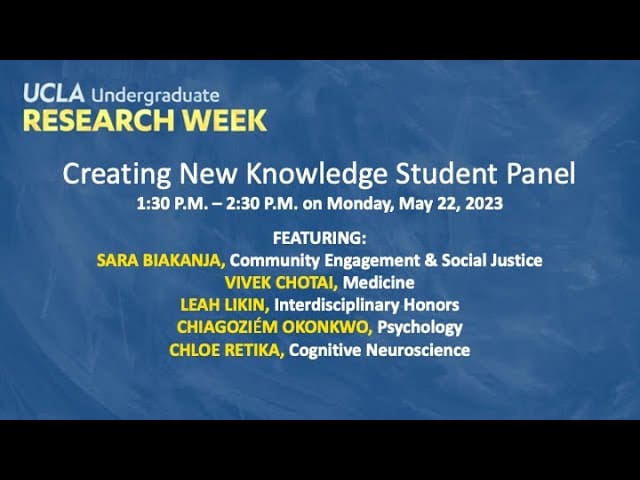
UCLA Undergraduate Research Week slide for the Creating New Knowledge Student Panel on May 22, 2023, listing panelists’ names, fields, and event time from 1:30 to 2:30 PM.
#55

(2013) UCLA’s annual Undergraduate Research Week launches. A week-long celebration of Bruin undergraduate research and creative inquiry, it gathers students from all disciplines to share their impactful, innovative work.
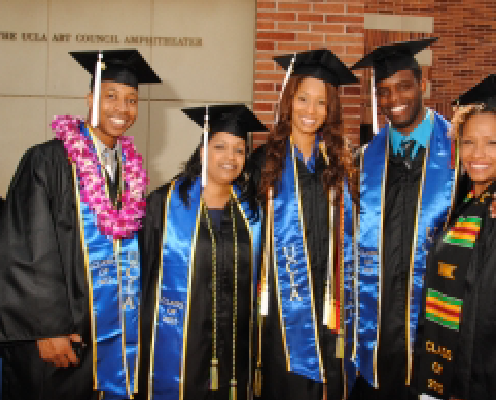
Five graduates in caps and gowns stand together smiling. They are wearing blue stoles, leis, and cords, with a building and UCLA sign in the background.
#56

(2014) The Interdepartmental Program in Afro-American Studies becomes the UCLA Department of African American Studies.
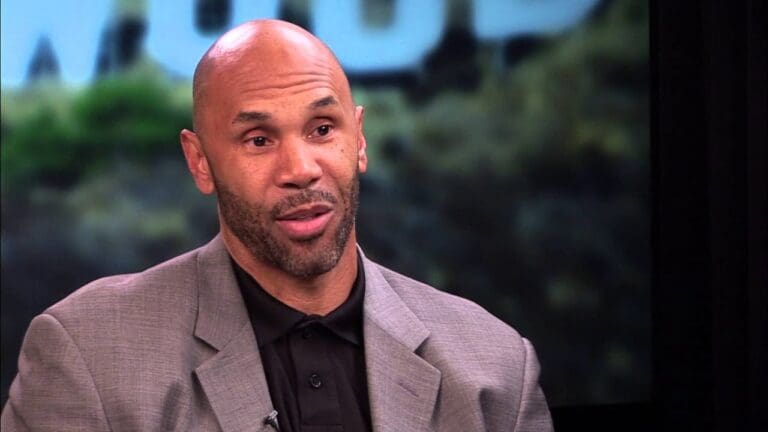
A man with a bald head, trimmed beard, and mustache wears a grey suit jacket over a black shirt, speaking in front of a blurred background.
#57

(2014) The annual UCLA Hollywood Diversity Report is launched. The reports primarily examine the relationship between diversity and the bottom line in the entertainment industry.
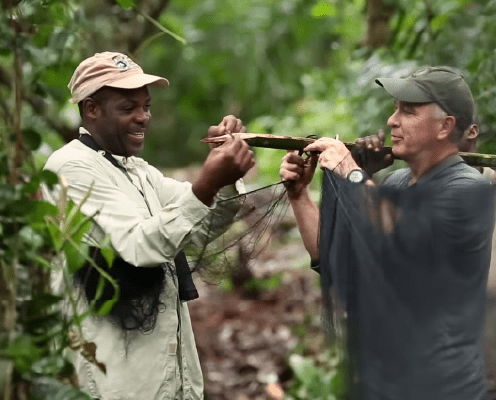
Two men stand in a lush, green forest, smiling while holding and untangling a fishing net together. Both wear outdoor clothing and hats, surrounded by dense vegetation.
#58

(2015) The Congo Basin Institute is founded as a partnership between UCLA and the International Institute of Tropical Agriculture. It is UCLA’s first foreign affiliate.
Headshot of a smiling woman with long brown hair and glasses, next to text about Kelsi Rutledges biology research titled The Fluid Dynamics of Smell: A Stingrays Perspective, with UCLA and Grad Slam logos.
#59

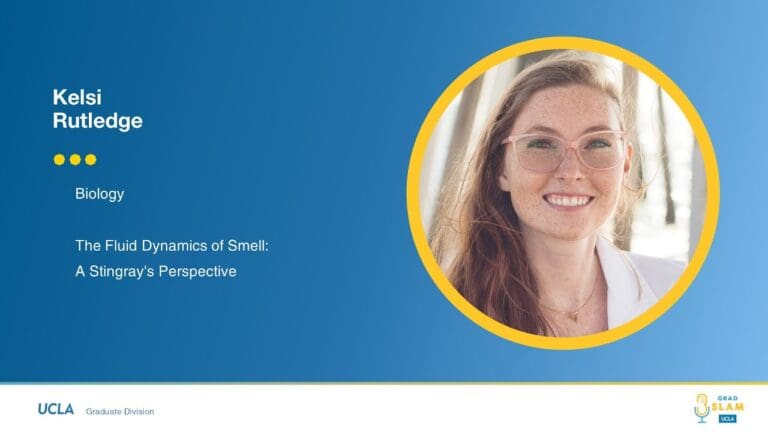
(2015) UC Grad Slam, an annual systemwide contest for students to communicate research in three minutes or less, launches. Each of the UC’s 10 campuses hold local contests and the winners square off, with the ultimate goal to provide emerging scientists and scholars with the skills to engage the public in their work.
Five men in suits and jackets stand smiling in front of a building with a sign that reads Mani L. Bhaumik Institute for Theoretical Physics. Black curtains frame the sign above them.
#60

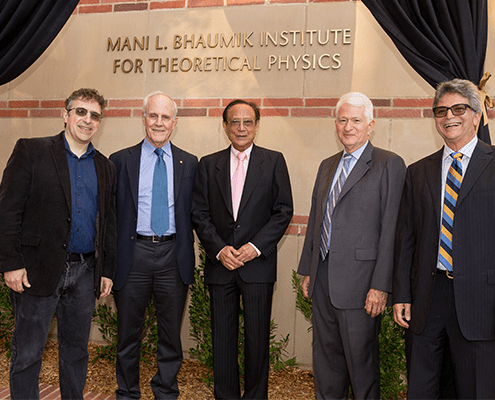
(2016) Physicist Mani Bhaumik donates $11 million, the largest gift in the history of the UCLA Division of Physical Sciences, to create the Mani L. Bhaumik Institute for Theoretical Physics.
A large yellow number 1 and the text UCLA Public University appear over blue-toned campus buildings, with the message: The number one public university for the 7th year in a row.
#61

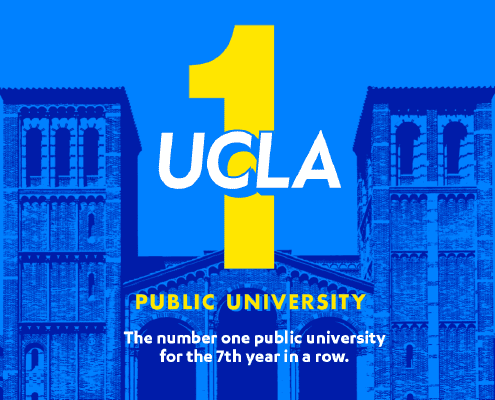
(2017) UCLA ties for No. 1 public university in the rankings by U.S. News & World Report, seven years running as of 2023.
A smiling person kneels on grass, holding the trunk of a baby elephant in an outdoor setting with green hills in the background.
#62

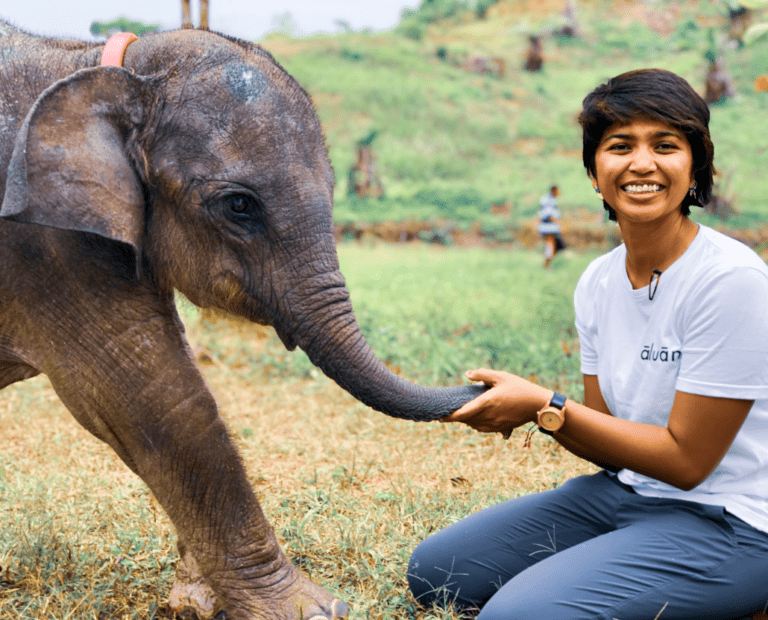
(2017) Presented by the IoES and made possible as part of a $20 million gift to UCLA from the Anthony and Jeanne Pritzker Family Foundation, the annual Pritzker Emerging Environmental Genius Award launches, the first major environmental award restricted to those under the age of 40.
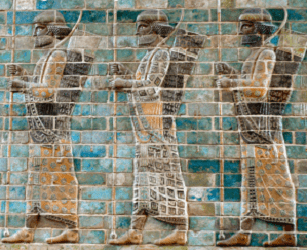
Ancient stone relief showing three armed warriors in profile, wearing detailed robes and headdresses, set against a blue and turquoise tiled background.
#63

(2017) A gift from Anahita Naficy Lovelace, granddaughter of the late Ebrahim Pourdavoud, and her husband, James Lovelace, makes possible the establishment of the Pourdavoud Center at UCLA — the first center in the Western Hemisphere that aims to advance the knowledge of ancient Iranian languages, history and religions. In 2023, the center is renamed the UCLA Pourdavoud Institute for the Study of the Iranian World, becoming the first institute in the UCLA College’s Division of Humanities.
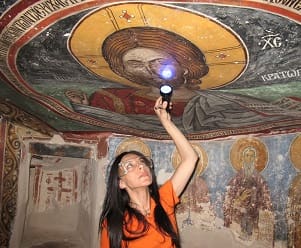
A woman wearing glasses and an orange shirt examines a painted religious ceiling with a flashlight, illuminating an image of Christ and other saints in an ornately decorated room.
#64

(2017) The Stavros Niarchos Foundation gives a $5 million grant to create the UCLA Stavros Niarchos Foundation Center for the Study of Hellenic Culture. Opening in 2020, the center builds on the university’s strengths in Hellenic studies, serves as a vibrant cultural hub and supports research across disciplines ranging from archaeology and classics to languages and digital humanities.
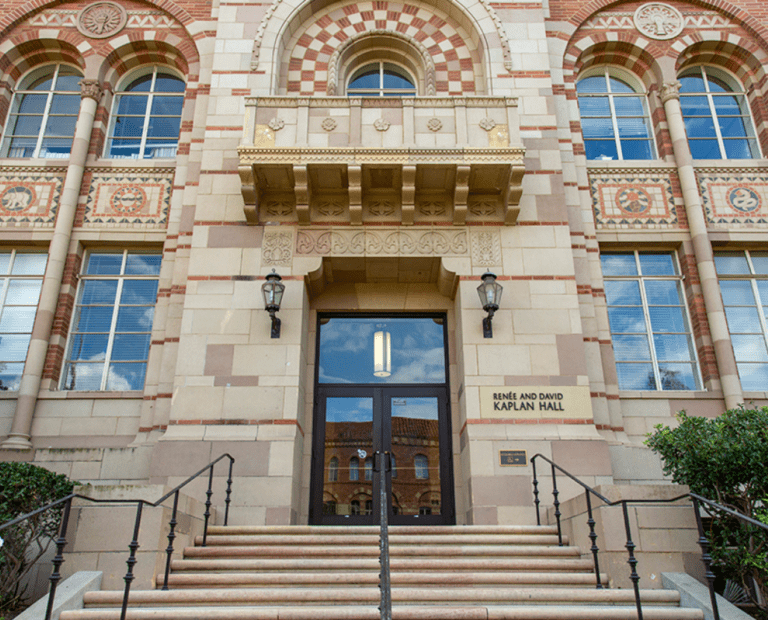
The entrance to a historic building with arched windows, detailed stonework, a balcony, and a sign reading Renée and David Kaplan Hall above the door. Stairs and railings lead up to the door, flanked by greenery.
#65

(2018) The largest-ever gift to the UCLA Division of Humanities and the Department of Philosophy, $25 million, is donated by Jordan and Christine Kaplan and Ken Panzer. UCLA’s Humanities Building is renamed Renée and David Kaplan Hall in honor of Jordan’s parents, both of whom are longtime UCLA faculty members.
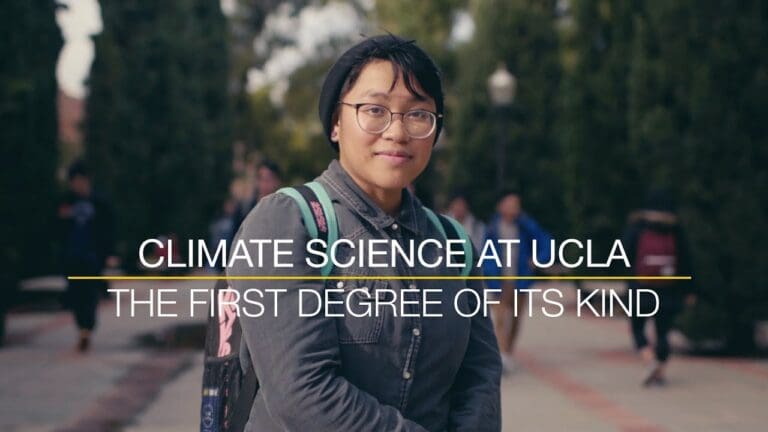
A person with glasses and a beanie stands outdoors on a campus path, wearing a backpack. Text over the image reads: CLIMATE SCIENCE AT UCLA: THE FIRST DEGREE OF ITS KIND. Trees and people are in the background.
#66

(2018) Housed in the UCLA Department of Atmospheric and Oceanic Sciences, the world’s first climate science major launches.
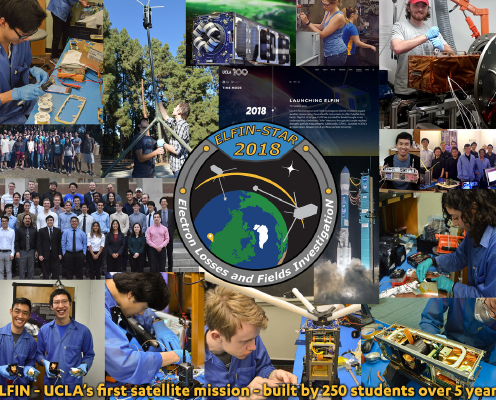
Collage of UCLA students building and testing satellites, featuring group photos, hands-on lab work, and the ELFIN-STAR mission logo at the center. Text reads UCLA’s first satellite mission - built by 250 students over 5 years.
#67

(2018) 250 UCLA students and alumni celebrate the launch of the Electron Losses and Fields Investigation (ELFIN) satellites. Not only is this the first time an entire spacecraft has been built, managed and operated on UCLA’s campus, but these students and alumni did almost all of the work over five years.
An elderly man with gray hair and glasses, wearing a dark blue suit, light blue tie, and white shirt, sits smiling in front of a brick fireplace.
#68

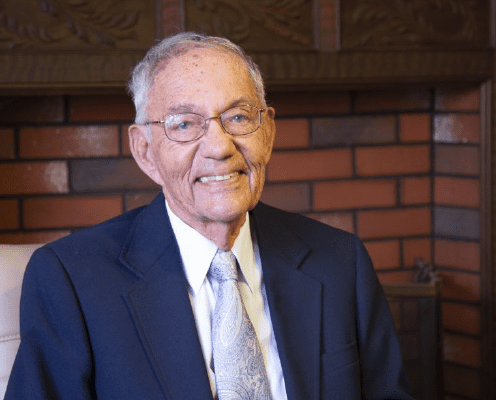
(2018) UCLA renames the historic botany building the La Kretz Botany Building after alumnus Morton La Kretz gave a total of $20 million to renovate it.
A nighttime image of a building with twin towers illuminated by colorful light projections, including the large projected image of a smiling man in a suit on the left side of the facade.
#69

(2019) Four years older than the UCLA College, the university itself celebrates its first century.
A man in a suit and tie and a woman in a purple dress smile closely together outdoors, with green trees and water in the background.
#70

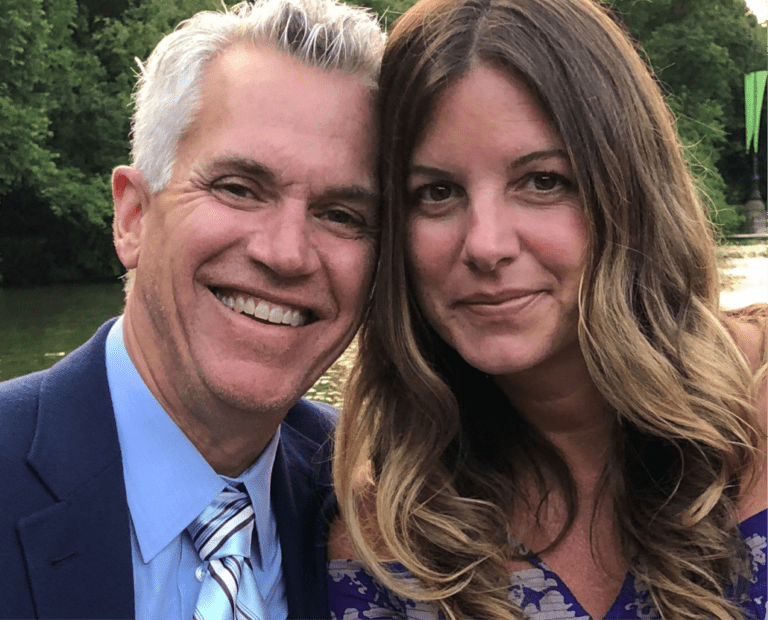
(2019) UCLA Social Sciences receives $20 million from Jennifer and Matthew C. Harris, an alumnus, to establish the UCLA Bedari Kindness Institute.

A performer in traditional Kabuki costume with an elaborate red wig and painted face poses dramatically on a wooden stage against a plain background.
#71

(2019) UCLA’s leadership in the study of Japanese literature, language and culture got a major boost when the humanities division received the largest gift from an individual donor in its history. A $25-million gift from Tadashi Yanai, the chair, president and CEO of Japan-based Fast Retailing and founder of clothing company Uniqlo, established the Tadashi Yanai Initiative for Globalizing Japanese Humanities.
A young woman in a graduation cap and gown stands smiling next to an older man in academic regalia and a medallion, both posing outdoors on a sunny day.
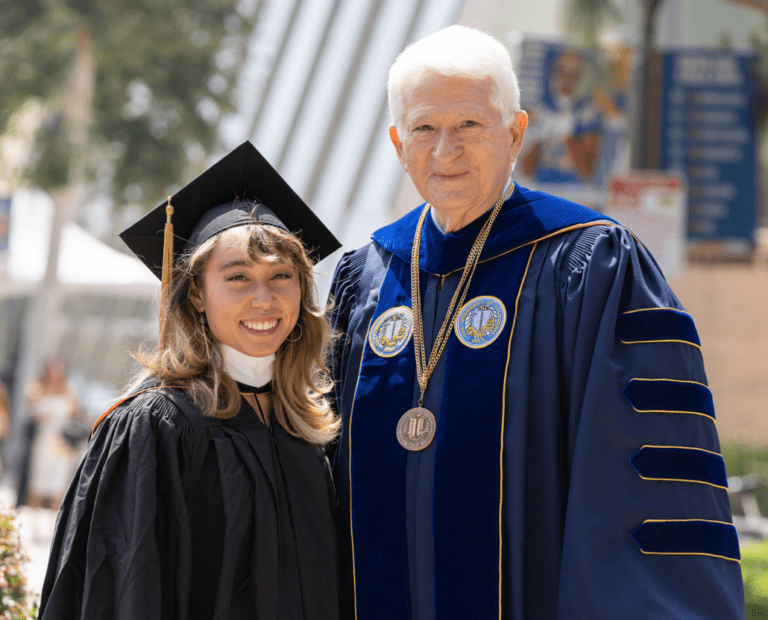
#72

(2019) Student gymnast Katelyn Ohashi gets a perfect 10 on a floor routine that also goes viral. Graduating the same year, Ohashi returns to serve as the 2022 UCLA College commencement speaker.
Three young women stand on a sandy beach at sunset, smiling and holding scientific equipment: a clipboard, a jar of water, and test tubes. All wear gloves, warm hats, and casual winter clothing. The ocean is in the background.
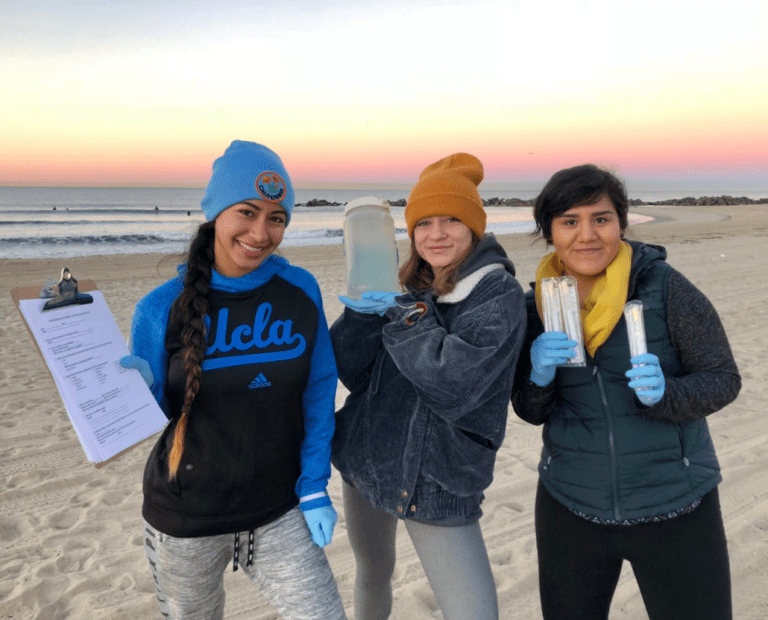
#73

(2019) The annual Chancellor’s Award for Community-Engaged Scholars launches, offering $10,000 awards to support UCLA ladder faculty in developing new, community-engaged research courses for undergraduates.
A tall, white, rectangular office building with many windows is partially framed by trees with autumn leaves. There is a brick plaza and people walking near the entrance of the building.
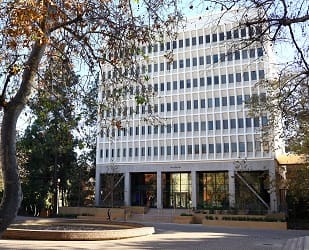
#74

(2019) UCLA receives a $30 million commitment from the Anthony and Jeanne Pritzker Family Foundation to support a major renovation of the Psychology Tower on the UCLA campus. In recognition of the gift, the building is named Pritzker Hall.
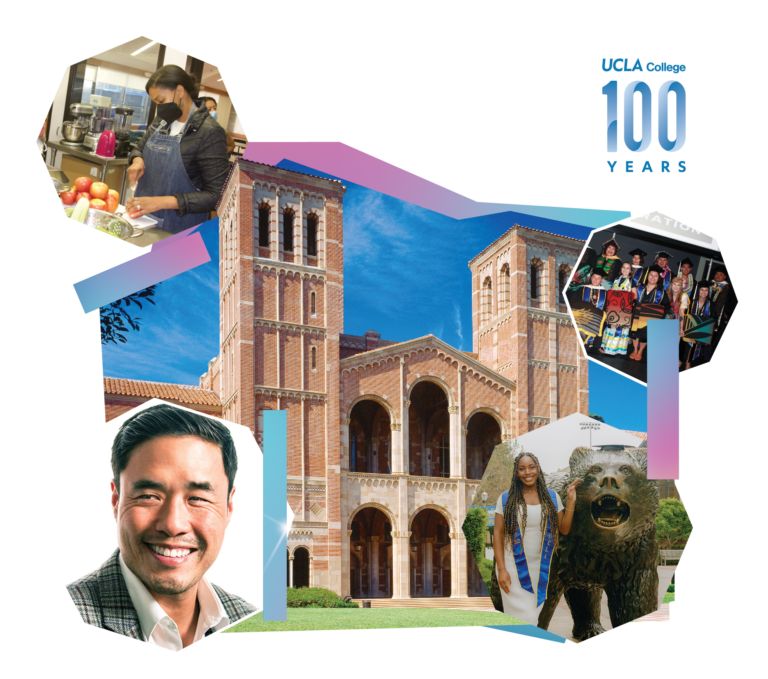
Collage featuring UCLA’s Royce Hall, a smiling man, a woman in graduation attire beside the Bruin Bear statue, a chef preparing food, and a group of students. Text reads “UCLA College 100 Years.”.
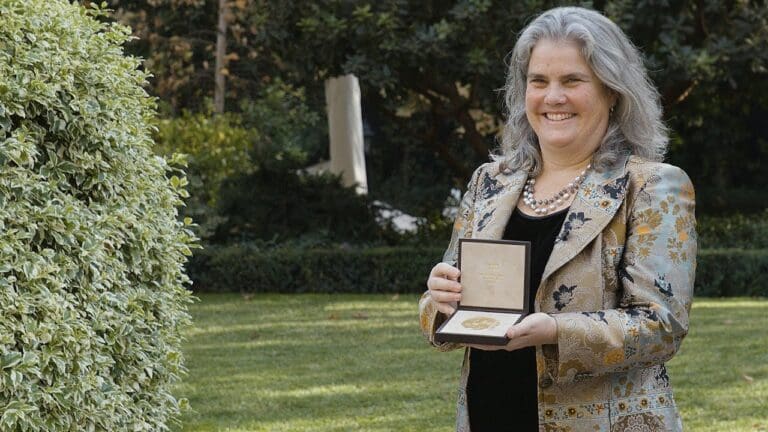
A woman with gray hair, wearing a patterned jacket and pearl necklace, stands outdoors on grass, smiling and holding an open award box with a gold medal inside. Shrubs and trees are in the background.
#75

(2020) Andrea Ghez becomes the fourth woman to win the Nobel Prize in physics, earning the honor “for the discovery of a supermassive compact object at the center of our galaxy.”
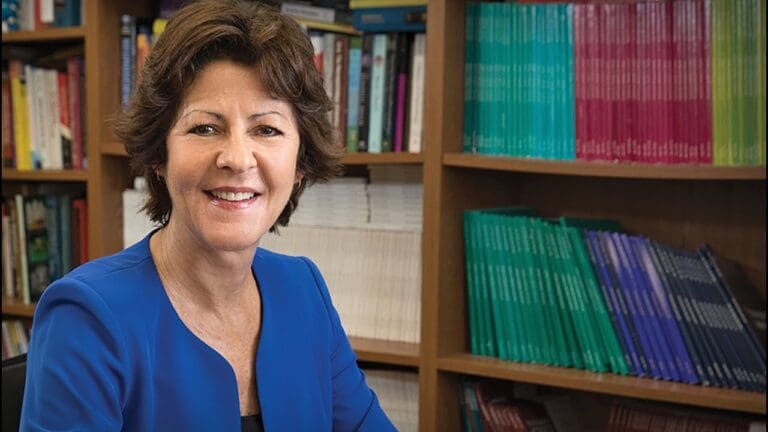
A woman with short brown hair, wearing a blue blazer, smiles while sitting at a desk in front of bookshelves filled with colorful books and journals.
#76

(2020) The UCLA College responds to the pandemic in creative ways, such as participating in UCLA’s COVID-19 Care Package, which included video messages from Professor Michelle Craske — who would go on to hold the inaugural Kevin Love Fund Centennial Chair at UCLA — offering mental, physical and emotional health tools and tips.
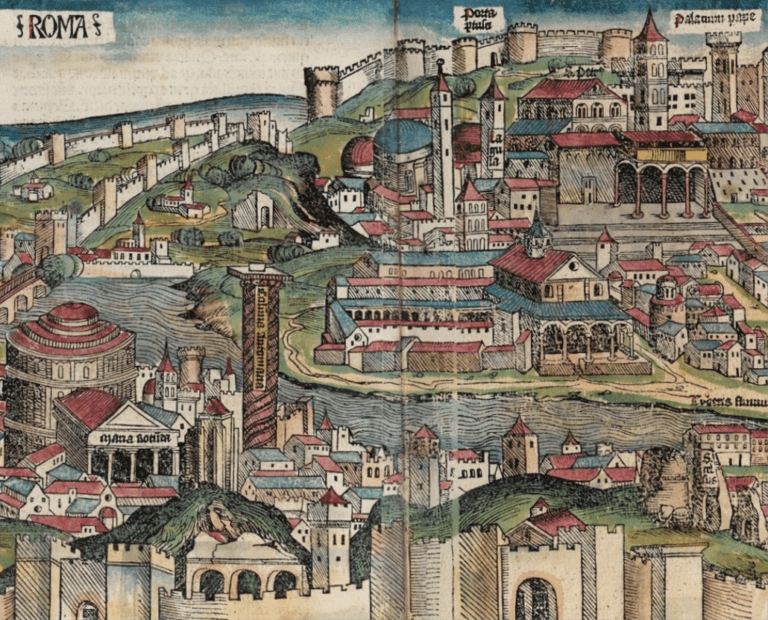
A colorful medieval illustration of Rome showing detailed buildings, city walls, towers, the Pantheon, and hills, with the Tiber River winding through the city. Ancient Roman and medieval architecture is depicted throughout.
#77

(2020) The Department of European Languages and Transcultural Studies is established, bringing together the former departments of French and Francophone Studies, Germanic Languages, Italian and Scandinavian.
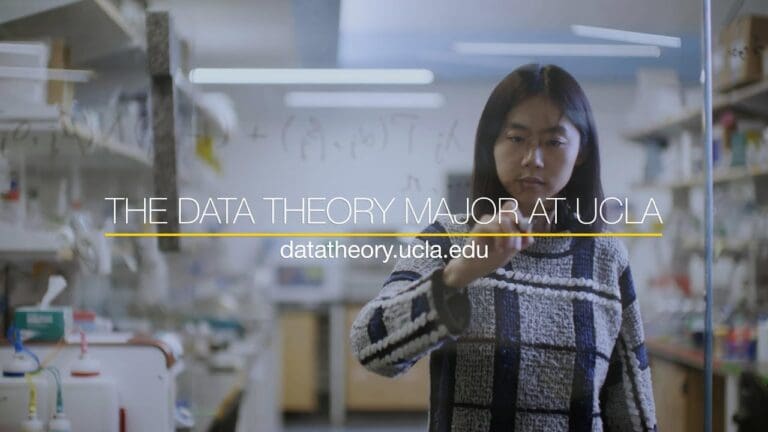
A person writes on a transparent board in a laboratory setting. Text over the image reads The Data Theory Major at UCLA and datatheory.ucla.edu.
#78

(2020) Uniting the mathematics and statistics departments, the data theory major at UCLA launches. This capstone major is the first in the world, both in name and content.
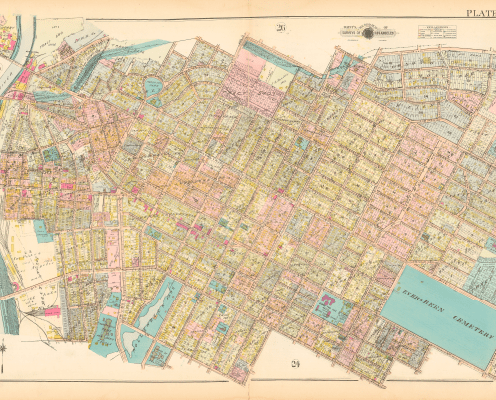
A detailed, colorful vintage map showing city streets, blocks, and landmarks with labeled areas, bodies of water, and parks. The map is densely packed with labeled plots and borders, oriented diagonally on a cream background.
#79
(2021) The Jewish Histories in Multiethnic Boyle Heights exhibit launches, part of the Mapping Jewish L.A. project, a decade-long partnership between the UCLA Alan D. Leve Center for Jewish Studies, UCLA Library and Special Collections, USC and other community archives.
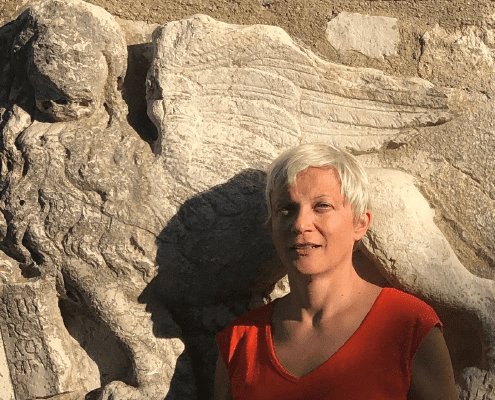
A person with short white hair wearing an orange top stands in sunlight in front of a weathered stone sculpture of a winged lion.
#80

(2021) Director Zrinka Stahuljak announces the transformation of the UCLA Center for Medieval and Renaissance Studies into the UCLA CMRS Center for Early Global Studies.
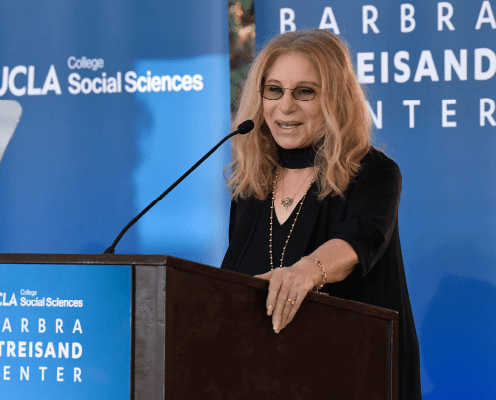
A woman with long blonde hair and glasses speaks at a podium with UCLA College Social Sciences and Barbra Streisand Center displayed on blue banners in the background.
#81

(2021) Thanks to a visionary gift from the icon, artist and activist, the Barbra Streisand Center is founded. It will become a future institute that will include four research centers that address her concerns: the Center for Truth in the Public Sphere, the Center for the Impact of Climate Change, the Center for the Dynamics of Intimacy & Power Between Women & Men, and the Center for the Impact of Art on the Culture.
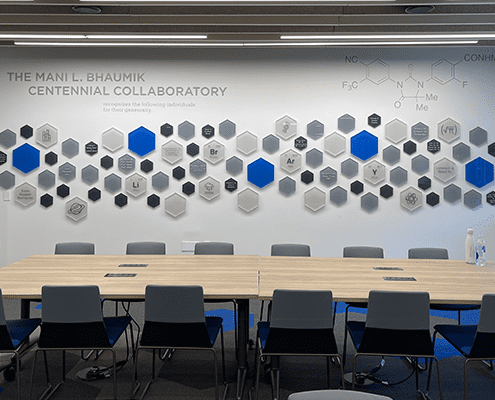
A modern meeting room with a wooden table, blue and gray chairs, and a wall decorated with hexagonal tiles featuring chemical symbols and names, labeled The Mani L. Bhaumik Centennial Collaboratory.
#82

(2020) Construction is completed on the Mani Bhaumik Centennial Collaboratory in Physical Sciences. Opening in 2022, it is an innovative lecture hall, study lounge and meeting space meant to spark unique and inspiring collaborations.
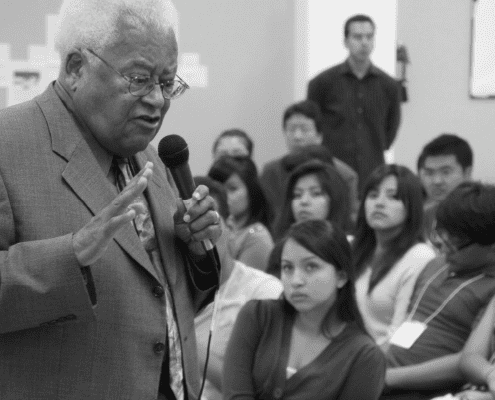
An elderly man in a suit speaks into a microphone in front of an attentive audience of young adults at an indoor event. The atmosphere appears serious and focused.
#83

(2021) The UCLA Labor Center’s historic MacArthur Park building is named in honor of Rev. James Lawson Jr., a civil and labor rights icon and 20-year UCLA labor studies faculty member.
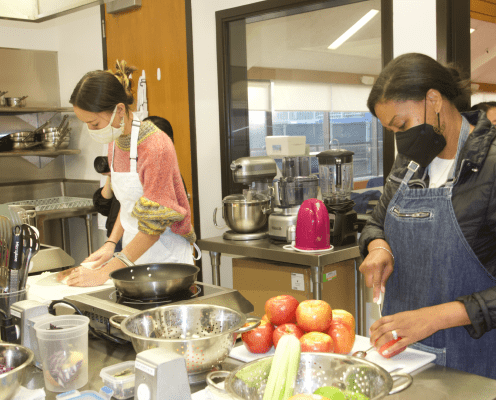
Two women wearing aprons and face masks chop vegetables and apples in a kitchen. There are bowls, utensils, and kitchen appliances on the counters around them.
#84

(2022) Thanks to an anonymous $13.5-million gift, the UCLA Rothman Family Institute for Food Studies is founded.
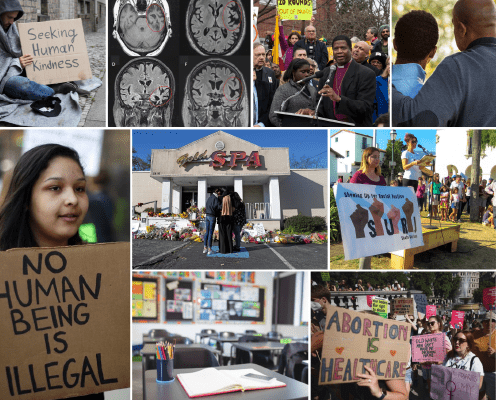
A collage showing protests, brain scans, a memorial at a spa, a classroom, and signs supporting kindness, immigrant rights, Black Lives Matter, abortion access, and healthcare.
#85

(2022) UCLA launches the Initiative to Study Hate, an ambitious social impact project that brings together a broad interdisciplinary consortium of scholars to understand and ultimately mitigate hate in all its forms.
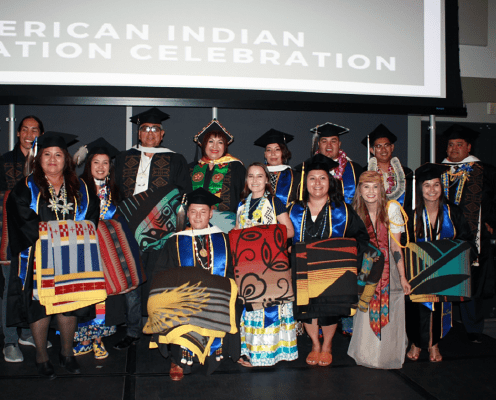
A group of graduates in regalia and traditional Native American clothing stand on stage, holding colorful blankets, smiling, with a screen behind reading American Indian Graduation Celebration.
#86

(2022) UCLA’s American Indian studies program becomes a full academic department.

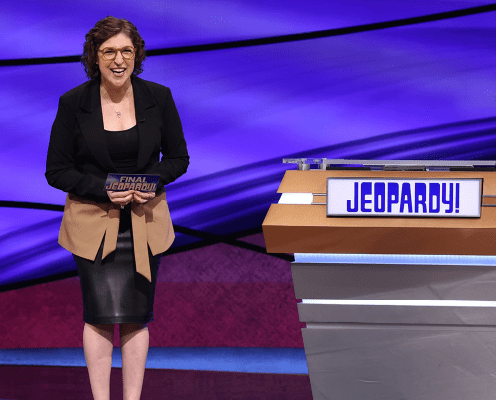
A woman in a black dress and tan blazer stands smiling on the Jeopardy! set, holding a Final Jeopardy! card beside the shows game podium with the Jeopardy! logo.
#87

(2022) Alumna Mayim Bialik is named one of the hosts of “Jeopardy,” but she is not the only UCLA College community member to participate on the show. Alumnus and assistant adjunct professor Hung Pham competed this same year as well.
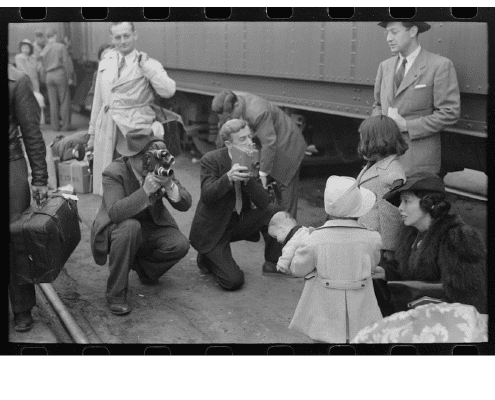
A group of reporters and photographers gather around a woman and two children on a train platform. Two men kneel with cameras, while others stand nearby holding bags and coats. A train is visible in the background.
#88

(2022) Presented by the Yanai Initiative of UCLA and Tokyo’s Waseda University, the augmented reality exhibition “BeHere / 1942 – A New Lens on the Japanese American Incarceration” opens.
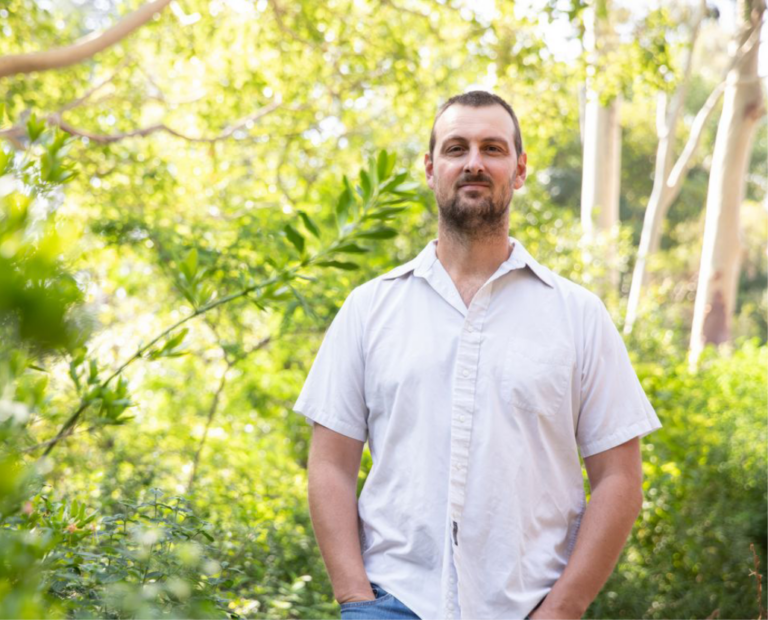
A man with short hair and a beard stands outdoors in a lush, green garden, wearing a short-sleeved white shirt and jeans. Sunlight filters through the trees in the background.
#89

(2023) Hydroclimatologist Park Williams, a professor in the department of geography, wins a MacArthur Fellowship, one of the many UCLA College Bruin recipients over the years, including internet studies and race scholar Safiya Noble (2021), historian Kelly Lytle-Hernández (2019), anthropologist Jason De León (2017), neurobiologist Elissa Hallem (2012), astrophysicist Andrea Ghez (2008), mathematician Terence Tao (2006), historian Saul Friedlander (1999), linguistic anthropologist Elinor Ochs, sociologist Rogers Brubaker (1994) anthropologist Sherry Ortner (1990), historian of religion Gregory Schopen (1985) and environmental historian and physiologist Jared Diamond (1985).
A spacecraft with a large solar sail orbits in deep space near a bright sun, with several planets and their curved orbital paths visible against a colorful cosmic background.
#91

(2023) To facilitate collaboration between the UCLA College Division of Physical Sciences, the UCLA Samueli School of Engineering, the UCLA Anderson School of Management and other campus partners, the UCLA SPACE Institute opens. In May, the SPACE Economy Forecast is held; watch it here.
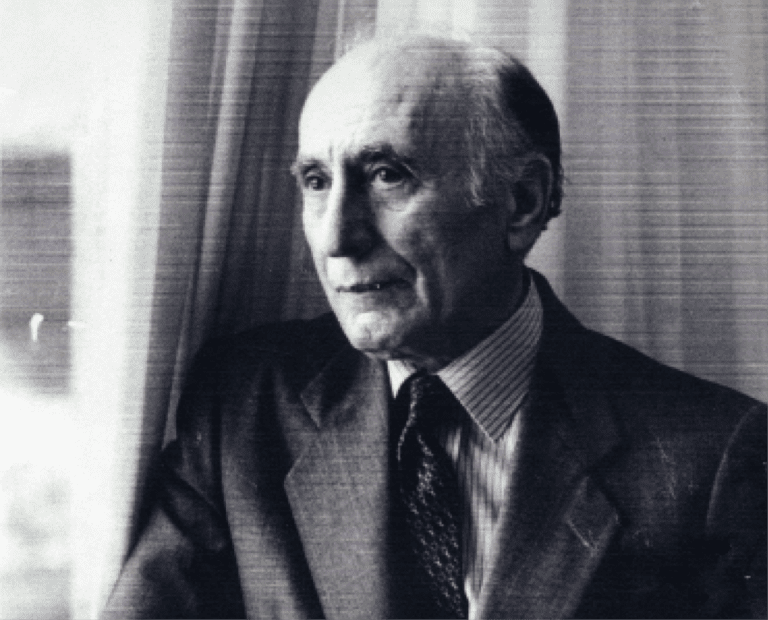
An older man in a suit and tie stands near a window with curtains, looking thoughtful. The image is in black and white.
#92

(2023) UCLA receives a gift of $11 million from the Persian Heritage Foundation to establish the Yarshater Center for the Study of Iranian Literary Traditions. Administrative infrastructure and leadership will be provided by the UCLA Pourdavoud Institute for the Study of the Iranian World, formerly known as the Pourdavoud Center and the first institute in the UCLA College’s Division of Humanities.
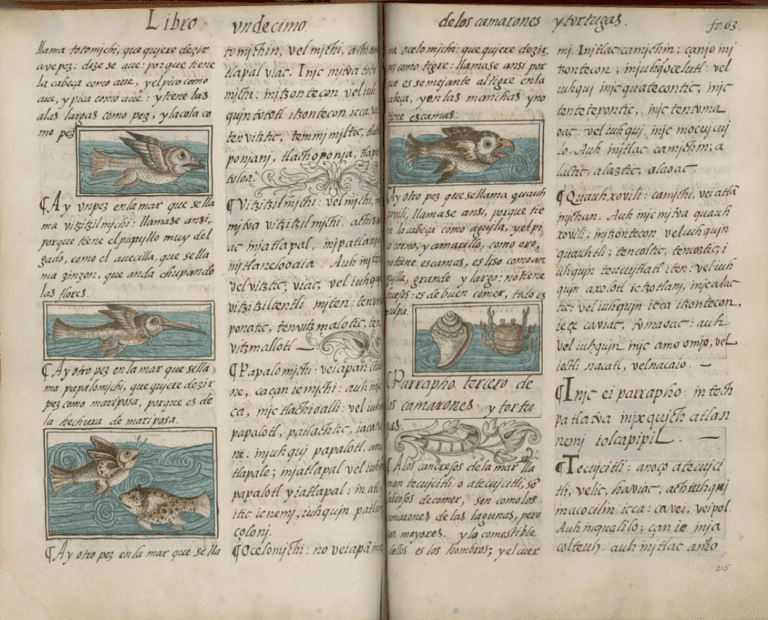
An old illustrated manuscript shows hand-drawn and colored images of various fish alongside handwritten Spanish text. Each fish illustration is framed, with detailed descriptions filling the surrounding pages.
#93

(2023) Professor Kevin Terraciano and many UCLA alumni complete an international collaborative project with the Getty and other partners to digitize the Florentine Codex, a 16th-century document and global treasure “widely regarded as the most reliable source of information about Mexica culture, the Aztec Empire and the conquest of Mexico.”
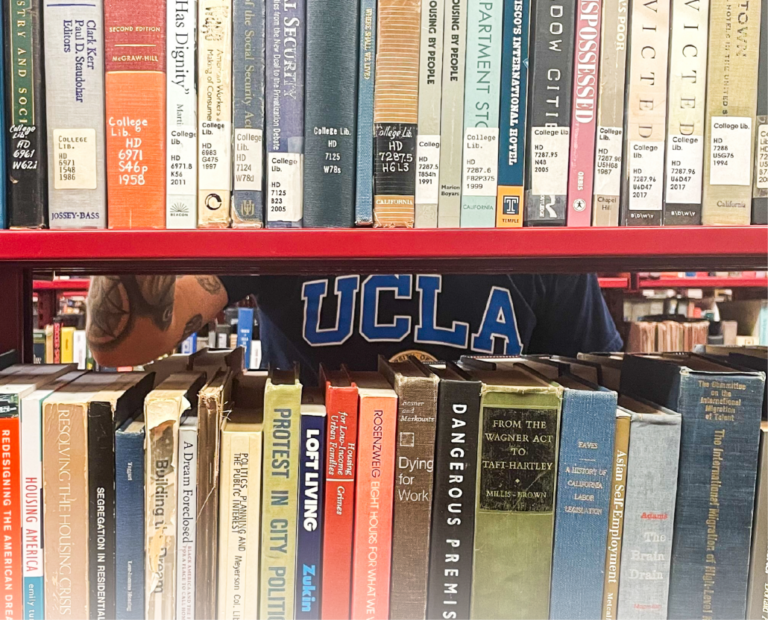
A person wearing a blue UCLA shirt is partially visible behind two rows of assorted books on red shelves in a library or bookstore. Only their chest and part of an arm are visible between the shelves.
#94

(2023) To better highlight all UCLA College faculty, student, alumni and staff authors, the Bruin Bookshelf launches. All College community members are invited to submit their book publication news.

Five diverse people, some with visible disabilities including a wheelchair and prosthetic leg, sit together on a globe against a warm yellow background, symbolizing inclusion and unity.
#95

(2023) Disability studies becomes a major at UCLA — the first of its kind at any public university in California.
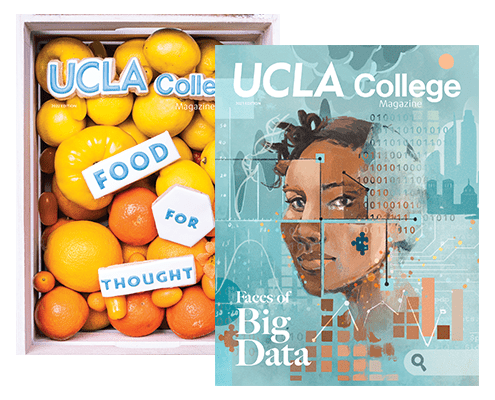
Two UCLA College Magazine covers: one with assorted citrus fruits and tiles spelling “FOOD FOR THOUGHT,” and another featuring an illustrated woman’s face overlaid with data graphics and the words “Faces of Big Data.”.
#96

(2023) The UCLA College magazine goes digital, marking an exciting new chapter in its storied history. Explore all the past issues here.

A planet with textured surface patterns is shown on the right, partially illuminated by a distant sun on the left, with two smaller celestial bodies nearby, set against a black space background.
#97

(2023) UCLA astronomers launch a new program, “Are We Alone in the Universe?” to crowdsource the search for extraterrestrial intelligence.
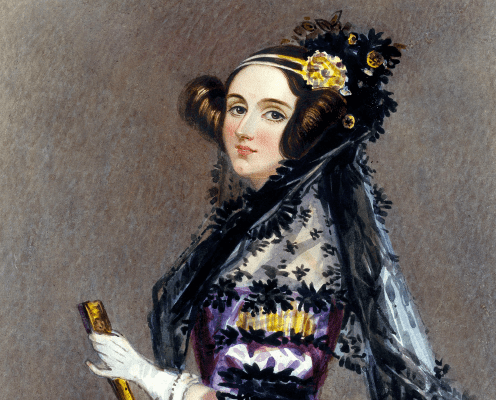
A historical portrait of a woman with brown hair styled in buns, wearing a black lace shawl, a floral headdress, and a purple dress, holding a closed fan, set against a neutral background.
#98

(2023) Jessica Cook, a UCLA doctoral candidate in English, uses artificial intelligence tools to make the documents of the world’s first computer programmer, Ada Lovelace, broadly accessible.
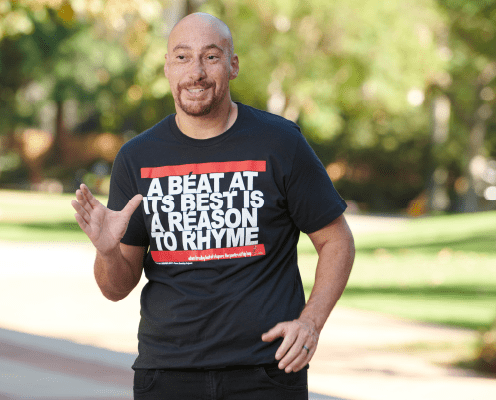
A smiling man with light facial hair stands outdoors, wearing a black t-shirt that says, A beat at its best is a reason to rhyme. Trees and greenery are visible in the blurred background.
#99

(2023) Professor Adam Bradley co-curates “Hip-Hop America: The Mixtape Exhibit” at the Grammy Museum, which runs from Oct. 7 through Sept. 4, 2024.
UCLA College 100 Years logo on a blue geometric background, with white text celebrating the colleges centennial anniversary.
#100
OUR STORY (AND YOURS) CONTINUES

Share your favorite milestone or story with us! Along with those of our graduating seniors and incoming Bruins-to-be, we’re thrilled to celebrate your UCLA College story.